If you’re a woman in the USA thinking about going blue in 2026, you’re not alone. Blue hair has exploded from a niche alt-fashion statement into a full-blown mainstream movement. Whether you want a soft pastel sky-blue balayage or a deep navy statement mane, this guide covers everything — the best blue hair dye brands, how to maintain the color, real pros and cons, and honest comparisons to help you decide what shade and product is right for your hair.
What’s Trending: Blue Hair for Women in 2026
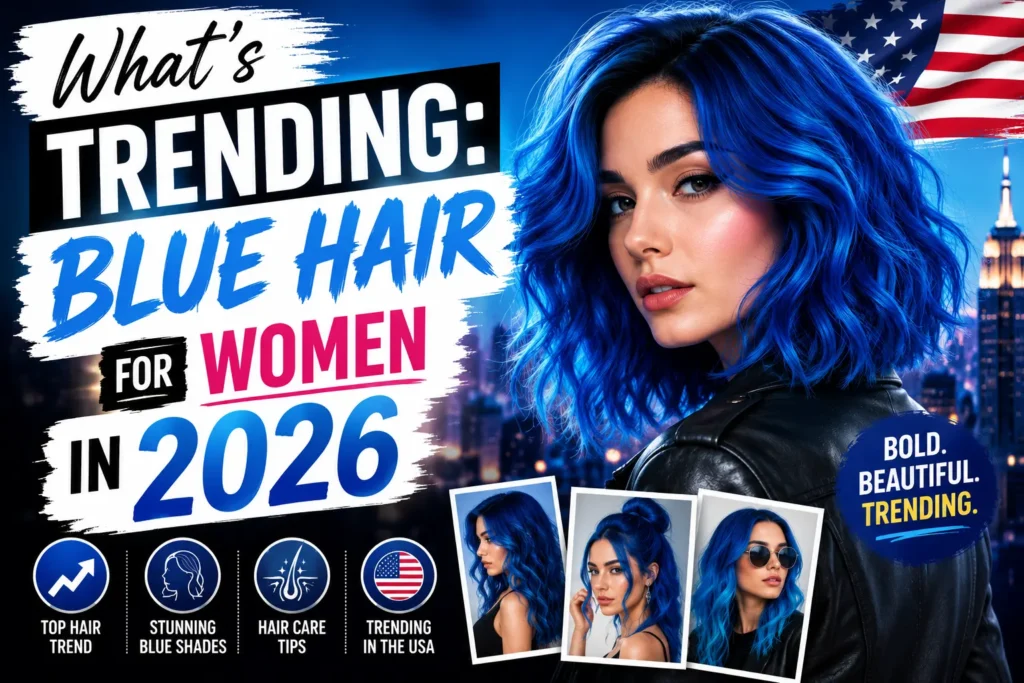
Blue hair is having its biggest moment yet. In 2026, the trend has evolved beyond the electric “mermaid blue” of the early 2020s. Today’s blue-haired women are choosing shades that feel personal, wearable, and even professional. Here’s what’s dominating salon chairs and Instagram feeds across the USA right now:
- Dusty Denim Blue — A muted, worn-in blue that feels effortlessly cool without screaming “I just dyed my hair.”
- Midnight Navy with Highlights — Deep and dimensional, perfect for women who want drama with elegance.
- Icy Blue Balayage — A softer, blended approach that grows out gracefully.
- Cobalt Blue Roots Melt — Bold at the roots, fading into lighter ends for a lived-in effect.
- Teal-Blue Ombre — Sitting right between green and blue, this has been huge in cities like LA, NYC, and Austin.
According to colorists across major US cities, blue hair requests have increased significantly in 2025–2026, with women between the ages of 18 and 45 making up the largest demographic. It’s no longer a “young person’s” color — it’s a confidence statement.
H2: Best Blue Hair Dye Brands for Women in 2026 (USA)
Choosing the right product is everything. A bad blue dye job fades to a sad green within two weeks. A great one stays vibrant for six to eight weeks. Here’s a full comparison of the most popular blue hair dye brands available in the USA right now.
H3: Blue Hair Dye Comparison Table
| Product / Brand | Shade Range | Price (USD) | Pros | Cons |
|---|---|---|---|---|
| Arctic Fox — Poseidon | True blue, semi-perm | $11–$14 | Vegan, no bleach fade, vibrant | Requires pre-bleached hair |
| Manic Panic — After Midnight Blue | Deep navy | $10–$13 | Long track record, no ammonia | Can stain scalp and skin |
| Overtone — Blue for Brown Hair | Medium blue tones | $29–$45 | Works on dark hair without bleach | Less vibrant on very dark hair |
| Joico Color Intensity — Azure | Electric blue | $12–$16 | Salon-quality at home, very vibrant | Fast fading without toner upkeep |
| Pravana Vivids — Blue | True vivid blue | $14–$18 | Extremely long-lasting, professional-grade | Usually requires professional application |
| Schwarzkopf LIVE — Ultra Brights Frozen Blue | Icy pastel | $9–$12 | Budget-friendly, easy application | Fades quickly, needs frequent touch-ups |
| Ion Color Brilliance — Radiant Blue | Royal to cobalt | $7–$10 | Affordable, available at Sally Beauty | Mixed results on darker hair |
| Splat — Blue Envy | Bright cobalt | $8–$11 | Widely available at Walmart/Target | Bleach kit included can be harsh |
H2: How to Choose the Right Blue Shade for Your Skin Tone
Not all blues work for all women. Here’s the quick guide colorists swear by:
H3: Warm Skin Tones (Yellow, Peachy, Golden Undertones)
Go for teal-blue or turquoise. These warm-adjacent blues complement your natural glow instead of clashing with it. Avoid ultra-cool icy blues — they can make warm skin look washed out.
H3: Cool Skin Tones (Pink, Red, Bluish Undertones)
You’re in luck — almost every blue shade works for you. Cobalt, royal blue, navy, and icy blue all complement cool undertones beautifully. Lean into high-contrast options.
H3: Neutral Skin Tones
Neutral undertones are the most flexible. Denim blue and slate blue are particularly flattering, offering that “effortlessly cool” aesthetic without overpowering your complexion.
H3: Dark Skin Tones
Bold, saturated blues like electric cobalt and deep sapphire look absolutely stunning against deep skin tones. Avoid pastels, which often don’t show up well without significant pre-lightening.
H2: What to Expect Before Going Blue — The Honest Truth
Before you book that appointment or crack open a box of blue dye, here’s what you genuinely need to know:
H3: Do You Need to Bleach Your Hair First?
Yes, in most cases. Blue is a cool-toned, light-based color. On natural dark brown or black hair, most blue dyes will either not show at all or appear as a dark tint that fades to a greenish-gray. To get true blue color, most women need to pre-lighten their hair to at least a level 8–9 (pale yellow or white-blonde).
Exceptions: Products like oVertone’s Blue for Brown Hair are specifically formulated for dark hair and can deposit a visible blue tint without bleach — though it won’t be the same vibrant result as on lightened hair.
H3: How Long Does Blue Hair Last?
On properly bleached and primed hair, a semi-permanent blue can last four to eight weeks before significant fading. Factors that affect longevity:
- Water quality — Hard water speeds up fading
- Shampooing frequency — Washing less often preserves color
- Heat styling — Frequent flat iron and blow dryer use fades color faster
- Sun exposure — UV rays break down pigment rapidly
- Sulfate-free shampoo — Essential for maintaining vivid color
H3: Will Blue Hair Damage My Hair?
The blue dye itself is generally gentle (especially semi-permanent formulas). The bleaching process is where damage happens. If your hair has never been chemically treated, a single round of bleaching is usually manageable. Multiple bleach sessions or bleaching over previously dyed hair increases the risk of breakage significantly.
H2: Full Pros and Cons of Blue Hair for Women
Pros of Going Blue
- Self-expression at its finest — Blue hair is bold, creative, and deeply personal.
- Huge variety of shades — From barely-there ice blue to dramatic electric cobalt, every woman can find her version.
- Complements many styles — Works with natural, boho, polished, edgy, and minimalist aesthetics.
- Growing workplace acceptance — In 2026, more companies are embracing personal expression, especially in creative industries, tech, and healthcare.
- Community and culture — The blue-haired community online is massive, supportive, and full of inspiration.
- Semi-permanent options are low-commitment — You can try it for a month without a permanent chemical change.
Cons of Going Blue
- Maintenance is real work — Blue fades faster than most colors and requires consistent upkeep.
- Bleaching risk — Pre-lightening is almost always necessary and can compromise hair health.
- Staining — Blue dye stains towels, pillowcases, shower walls, and skin if not managed carefully.
- Cost adds up — Between bleach, dye, color-safe shampoo, toners, and touch-ups, the annual cost can be significant.
- Not universally accepted — Some professional environments, particularly traditional corporate roles, may still frown upon vivid hair color.
- Fades to green or gray — Without proper maintenance and toning, faded blue can look muddy.
H2: How to Maintain Blue Hair and Keep It Looking Fresh
Maintenance is the difference between gorgeous, head-turning blue hair and a sad, faded mess. Here’s the routine that professional colorists recommend:
H3: Weekly Blue Hair Care Routine
Day 1–2 (After Dyeing): Skip washing entirely. Let the color fully set into the hair shaft.
Washing Days: Use a sulfate-free, color-safe shampoo (brands like Pureology, Joico Color Balance Blue, or WOW Skin Science are popular in the USA). Wash in cool water — hot water opens the cuticle and lets color molecules escape.
Every 2–3 Weeks: Apply a blue color-depositing conditioner (like oVertone’s Daily Conditioner in Blue) to refresh and top up color between full dye sessions.
Monthly: Deep condition with a protein-rich mask to repair any bleach-related damage. Brands like Olaplex No. 3, Redken Extreme, or Briogeo Don’t Despair, Repair are widely available and trusted.
H3: Products You Need for Blue Hair
| Product Type | Recommended Brand | Average Price |
|---|---|---|
| Color-safe shampoo | Pureology Hydrate | $28–$32 |
| Blue depositing conditioner | oVertone Blue Daily | $29–$35 |
| Deep conditioning mask | Olaplex No. 3 | $28–$30 |
| UV protection hair spray | Not Your Mother’s | $8–$10 |
| Silk pillowcase | LilySilk or Blissy | $40–$60 |
| Purple/Blue toning shampoo | Shimmer Lights | $10–$14 |
H2: Blue Hair at the Salon vs. DIY at Home — Which Is Better?
This is the most common question women ask before going blue.
H3: Going to a Salon
Best for: First-timers, women with dark or previously chemically treated hair, anyone wanting a complex technique like balayage, ombre, or color melt.
Average cost in the USA: $150–$400+ depending on salon, city, and technique. In major cities like New York and LA, expect the higher end of that range.
Advantages: A trained colorist can assess your hair’s condition, perform a strand test, and execute techniques that are nearly impossible to replicate at home. They also have access to professional-grade products that outperform drugstore options.
H3: Doing It at Home
Best for: Women who have successfully bleached their hair before, those using semi-permanent dye on already-lightened hair, or those using dark-hair-friendly formulas.
Average cost: $20–$60 for a full DIY setup.
Advantages: Significantly cheaper, convenient, and surprisingly effective for straightforward applications.
Honest warning: Do not attempt to bleach your own hair for the first time without research, a strand test, and ideally a friend helping you. Bleach applied unevenly or left on too long causes breakage and burns.
H2: Blue Hair in the Workplace — Is It Acceptable in 2026?
The short answer: it depends on your industry, and things are genuinely improving.
In 2026, industries like tech, creative agencies, healthcare (clinical staff in many hospitals now permit it), education, entertainment, and small businesses have broadly accepted vivid hair color as part of normal self-expression. Remote work culture has also significantly reduced the friction around appearance.
Industries where caution is still advised include traditional law firms, corporate finance, and certain government or military roles.
The best approach is to know your specific workplace culture rather than relying on general rules. Many women in traditionally conservative industries opt for subtle ombre techniques — navy at the ends, natural color at the roots — giving them the best of both worlds.
Conclusion
Blue hair for women in 2026 is more accessible, more diverse, and more celebrated than ever before. Whether you’re drawn to the dreamy softness of ice blue or the striking power of electric cobalt, there’s a shade and a method that works for your hair, your skin tone, your lifestyle, and your budget. The key is going in informed — choosing the right product, understanding what your hair needs before and after the color, and committing to a maintenance routine that keeps things looking intentional rather than faded.
The women rocking blue hair right now aren’t doing it to fit a trend. They’re doing it because it feels like them. And in 2026, that’s exactly the kind of energy the world could use more of.
Frequently Asked Questions (FAQs)
H3: Can I get blue hair without bleaching if I have naturally dark hair?
Yes, but with realistic expectations. Products like oVertone Blue for Brown Hair and some Manic Panic shades deposit visible blue tones on dark hair without bleach. The result will be a subtle blue sheen rather than a vivid, saturated color. For true electric or pastel blue, bleaching is typically necessary.
H3: How often do I need to touch up blue hair?
Most semi-permanent blue dyes require a full re-application every four to six weeks depending on your hair’s porosity, how often you wash, and your water type. Using a color-depositing conditioner weekly extends that timeline by refreshing the tone between sessions.
H3: Will blue hair look good on me if I’m over 40?
Absolutely. Blue hair has no age limit. In fact, navy blue and denim blue tones tend to be particularly sophisticated and wearable for women over 40, especially when paired with a polished cut. Many women over 40 report that going blue was one of the most freeing beauty decisions they ever made.
H3: What’s the fastest blue hair is fading and how do I stop it?
The most common culprits are sulfate shampoos, hot showers, frequent washing, and sun exposure. Switching to sulfate-free shampoo, washing in cool water, adding a UV-protective hair product to your routine, and limiting washes to two or three times per week will dramatically slow color fade.
H3: Is blue hair high maintenance compared to other colors?
Yes, compared to natural shades, blue is higher maintenance. But compared to other vivid colors like red or pink, blue is generally more forgiving when it fades — it often transitions to softer, dusty blue tones rather than brassy or washed-out shades, as long as you start with a good-quality dye and maintain it with color-depositing products.
This article is written for informational purposes for women in the USA considering blue hair in 2026. Product prices reflect general USA retail averages and may vary by retailer and location.