




She sat across from me and said nothing for almost a full minute.
Then: I’ve been wearing a hat every single day for two years. I haven’t let my husband see my hair in the morning light. I don’t recognize myself anymore.
She was 44. A marketing director. Confident in every other area of her life. And completely devastated by hair loss that had been slowly, quietly taking something fundamental from her sense of self.
I’ve heard versions of that story hundreds of times in my clinic.
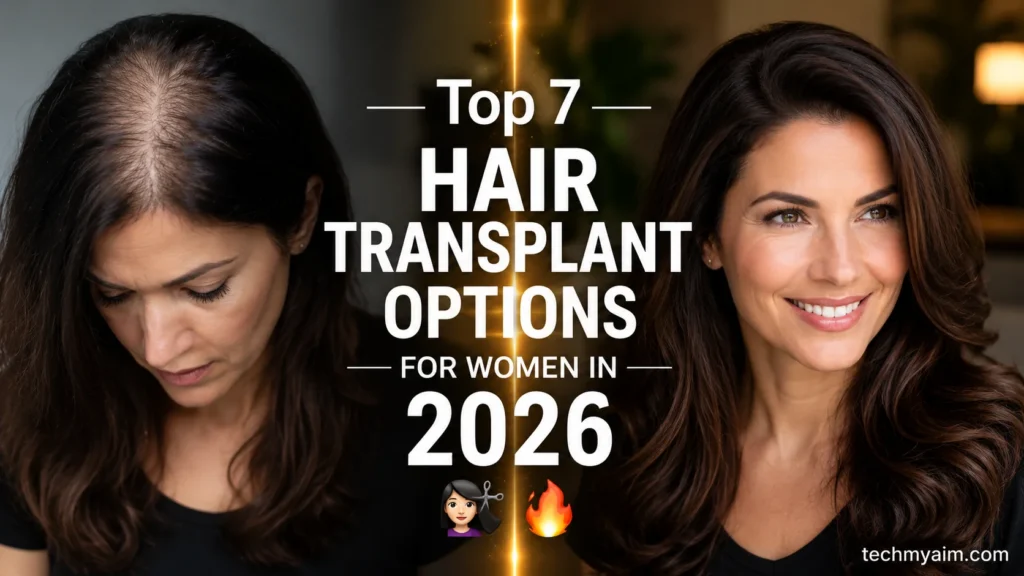
And I’ve also had the privilege of watching women — after the right treatment, the right procedure, the right timing — sit in that same chair two years later and say: “I forgot what it felt like to feel like me.”
That’s why I do this work. And that’s why I wrote this guide.
Hair transplants for women in 2026 are not what they were ten years ago. The technology has advanced dramatically. The options are more varied, more precise, and more suitable for female hair loss patterns than ever before. But the information available online is either outdated, overly clinical, or written by people who have never actually sat with a woman in hair loss distress and helped her find a path forward.
This guide is different. Everything here comes from 12 years of clinical practice, hundreds of female transplant consultations, and a genuine commitment to giving you the full picture — not just the marketing version.
Understanding Female Hair Loss First — Why This Matters Before Any Transplant Decision
Before we talk about procedures, we need to talk about this.
Hair transplants are not the right first step for every woman experiencing hair loss. And any clinic that tells you otherwise — without a thorough diagnostic workup — is not a clinic you want operating on your scalp.
Female hair loss is fundamentally different from male hair loss in its causes, patterns, and treatment responses.
Expert Rule: Every woman considering a hair transplant should first have a complete trichological assessment — including blood work for ferritin, thyroid function, hormonal panel, and vitamin D levels. Up to 40% of women I see in consultation have a reversible underlying cause for their hair loss that, when treated, significantly reduces or eliminates the need for surgical intervention.
Common Causes of Female Hair Loss in 2026
| Cause | Prevalence | Reversible? | Transplant Appropriate? |
|---|---|---|---|
| Female Pattern Hair Loss (FPHL) | Most common | Partially | Yes — with stable loss |
| Telogen Effluvium (stress/shock) | Very common | Yes | Rarely needed |
| Hormonal changes (menopause, postpartum) | Very common | Partially | Sometimes |
| Traction Alopecia | Common | Partially | Yes — if caught early |
| Alopecia Areata | Moderate | Variable | Generally not recommended |
| Scarring Alopecia | Less common | No | Yes — specialized approach |
| Nutritional deficiency | Common | Yes | Not needed |
| Thyroid disorder | Common | Yes | Not needed |
The bottom line: A transplant works best when hair loss has stabilized, the cause is understood, and non-surgical options have been explored or ruled out. A good trichologist will tell you this honestly even when it means you don’t need surgery yet.
Are You a Good Candidate for a Hair Transplant? — The Real Criteria
This is the question every woman should ask before anything else.
You are likely a good candidate if:
- Your hair loss has been stable for at least 12 months
- You have sufficient donor hair density at the back and sides of your scalp
- Your hair loss is due to FPHL, traction alopecia, or scarring from injury or surgery
- You are in good general health with no autoimmune conditions affecting the scalp
- You have realistic expectations about results and recovery
You may not be a suitable candidate if:
- Your hair loss is still actively progressing
- You have diffuse thinning across your entire scalp including the donor area
- Your hair loss is due to an autoimmune condition like alopecia areata
- You are pregnant or planning pregnancy within 12 months
- You are experiencing hair loss from a currently untreated medical condition
Stat Worth Knowing: According to the International Society of Hair Restoration Surgery, female hair transplant procedures have increased by 67% globally between 2022 and 2026 — but female candidacy rates remain lower than male because of the diffuse nature of female hair loss patterns.
Top 7 Hair Transplant Options for Women in 2026
1. FUE — Follicular Unit Extraction — The Gold Standard for Women
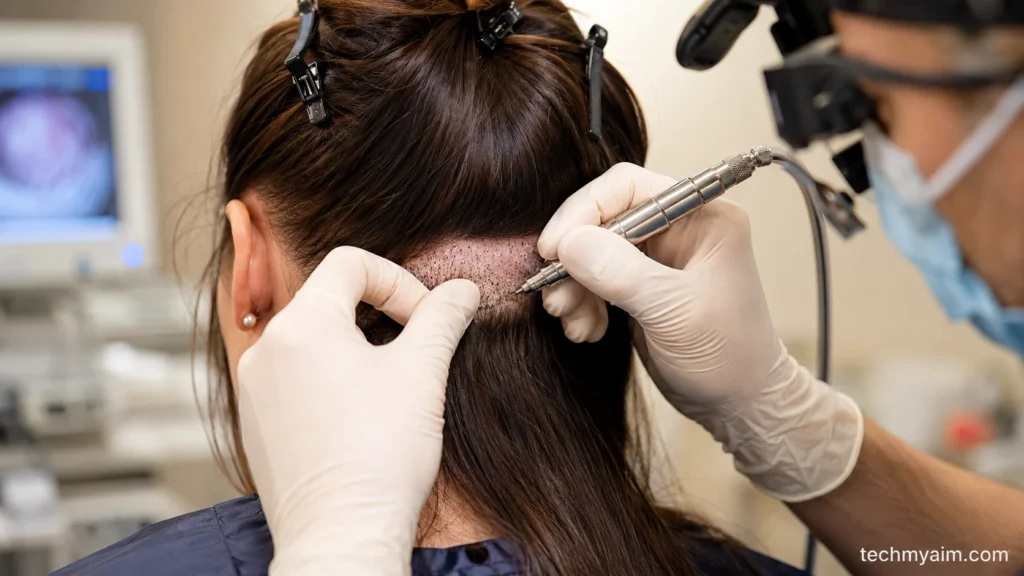
FUE is the most widely performed hair transplant technique in the world right now — and for good reason. It has transformed female hair restoration specifically because it doesn’t require shaving the entire head, leaves no linear scar, and allows for extremely precise placement of individual follicular units.
Here’s how it works in plain language.
Individual hair follicles are extracted one by one from the donor area — typically the back and sides of the scalp where hair is genetically resistant to loss. Each follicle is then individually implanted into the thinning or balding recipient area at a precise angle and depth.
No stitches. No linear scar. Minimal downtime.
FUE — Complete Overview
| Factor | Details |
|---|---|
| Procedure time | 4–10 hours depending on graft count |
| Anesthesia | Local anesthesia only |
| Scarring | Tiny dot scars — virtually invisible |
| Recovery time | 7–14 days for initial healing |
| Full results visible | 12–18 months post-procedure |
| Average graft count (women) | 1,000–3,000 grafts |
| Average cost (2026) | $4,000–$15,000 depending on clinic and graft count |
| Suitable for | FPHL, traction alopecia, hairline restoration |
Expert Rule: For women who want to keep their hair long throughout the process — and most do — FUE can be performed using the long hair FUE technique, where only the donor follicles are trimmed short at extraction while surrounding hair remains long. This means nobody needs to know you had anything done.
What Makes FUE Specifically Ideal for Women
- No full shave required with experienced surgeons using long-hair or no-shave FUE
- Natural hairline restoration — particularly effective for female hairline refinement
- Scalp scar coverage — individual dot extraction scars are undetectable under normal hair
- Combine with PRP — FUE results are significantly enhanced when combined with PRP therapy at the time of procedure
2. FUT — Follicular Unit Transplantation — When Volume Is the Priority
FUT — sometimes called the “strip method” — has been somewhat overshadowed by FUE in recent years. But it remains a highly valid option in specific situations — particularly for women who need a large number of grafts in a single session.
In FUT, a strip of scalp tissue is surgically removed from the donor area, dissected under microscopes into individual follicular units, and then implanted into the recipient area. The donor site is closed with stitches, leaving a linear scar.
The scar is the primary drawback. For women with long hair, it is typically hidden completely. But it is permanent, and women who prefer to wear short hair should consider this carefully.
FUT vs. FUE — The Honest Comparison
| Factor | FUT | FUE |
|---|---|---|
| Graft yield per session | Higher — 3,000–5,000+ | Moderate — 1,000–3,000 |
| Scarring | Linear scar at donor site | Tiny dot scars |
| Suitable for short hair? | No — scar visible | Yes |
| Recovery time | 10–21 days | 7–14 days |
| Cost | Generally lower | Generally higher |
| Hair shaving required? | Donor strip area only | Minimal to none (long-hair FUE) |
| Best for | Large coverage needs | Precision, minimal scarring |
Insider Tip: Some surgeons now offer combined FUT + FUE procedures — using FUT to harvest the bulk of grafts efficiently and FUE to supplement and refine. For women needing very large graft counts in a single session, this hybrid approach can maximize yield while minimizing overall donor area impact.
3. Robotic Hair Transplant — ARTAS iX System — Precision Meets Technology
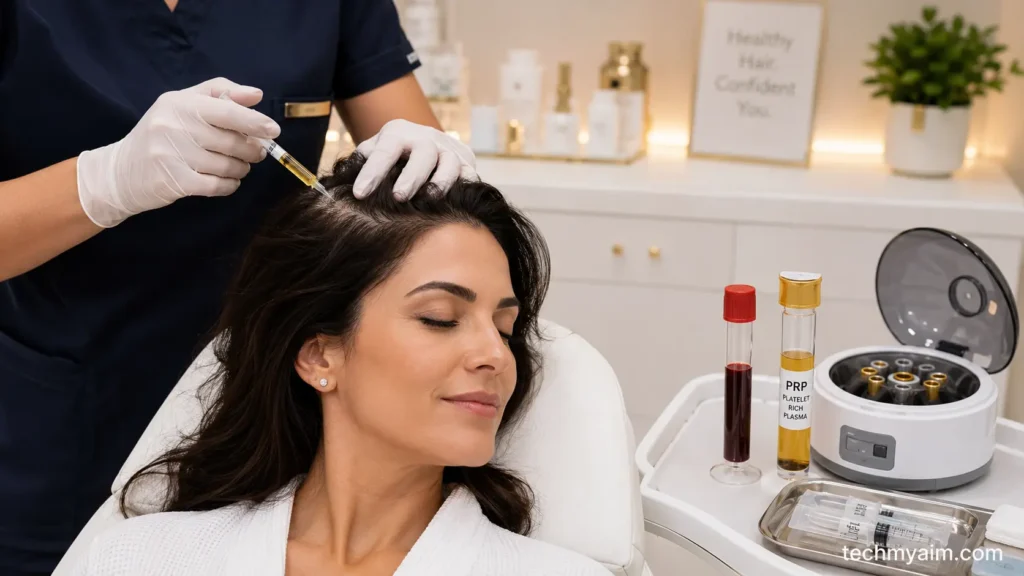
This is where 2026 hair restoration gets genuinely exciting.
The ARTAS iX robotic system uses artificial intelligence and robotic precision to perform FUE extraction with a level of consistency and accuracy that even the most skilled human surgeon cannot maintain across a 6–8 hour procedure.
The robot maps the entire scalp in 3D, identifies the optimal follicles for extraction based on angle, density, and health, and harvests them with sub-millimeter precision — minimizing transection rates (accidentally cutting the follicle during extraction, which renders it unusable).
For women, this technology is particularly valuable because female follicles often sit at more varied angles than male follicles — a challenge that the AI mapping system handles more consistently than manual extraction.
ARTAS iX — Key Facts for 2026
| Feature | Details |
|---|---|
| Technology | AI-guided robotic FUE extraction |
| Transection rate | Under 5% — significantly lower than manual FUE |
| Procedure time | 5–8 hours |
| Availability | Major cities worldwide — growing rapidly |
| Cost premium | 20–40% higher than manual FUE |
| Best suited for | Women with straight to slightly wavy hair |
| Limitation | Less effective on very curly or coily hair |
Expert Rule: ARTAS currently performs best on straight to wavy hair textures. Women with very curly or coily hair may find that an experienced human FUE surgeon achieves better results for their specific hair type — because the robotic system’s follicle tracking works most reliably on straight follicle paths.
4. DHI — Direct Hair Implantation — The Most Natural Hairline Technique

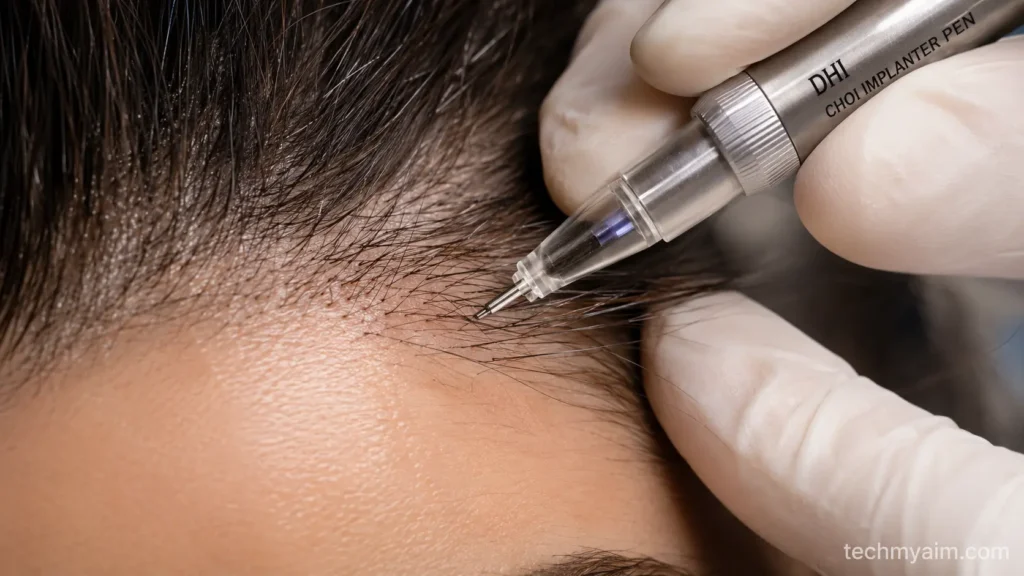
DHI is a refined evolution of FUE that uses a specialized pen-like implantation device called a Choi Implanter Pen to simultaneously create the recipient channel and implant the follicle in a single motion.
In traditional FUE, extraction and implantation are two separate steps — channels are created first, then follicles are placed. DHI combines these steps, which offers two significant advantages:
Shorter time outside the body for each follicle — meaning higher graft survival rates. And more precise control over the angle, depth, and direction of each implanted hair — meaning more natural-looking results, especially at the hairline.
For women specifically, DHI is the technique I recommend most often for hairline restoration and crown density work — the two areas where women most commonly seek improvement.
DHI vs. Standard FUE — Key Differences
| Factor | DHI | Standard FUE |
|---|---|---|
| Implantation device | Choi Implanter Pen | Forceps into pre-made channels |
| Graft survival rate | Higher — less time exposed | Standard |
| Hairline precision | Exceptional | Very good |
| Density achievable | Higher in single session | Standard |
| Procedure time | Longer | Shorter |
| Cost | Higher | Standard |
| Shaving required | Minimal | Minimal to none (long-hair technique) |
| Best for | Hairline, crown, precision work | Overall coverage, larger areas |
Insider Tip: DHI is the technique most commonly used by top surgeons for no-shave hair transplants in women — because the Choi pen allows precise implantation between existing hairs without disturbing them. If keeping your full hair length throughout the procedure is a priority for you, ask specifically about DHI with a no-shave approach.
5. Platelet-Rich Plasma (PRP) Therapy — Not a Transplant, But Worth Understanding
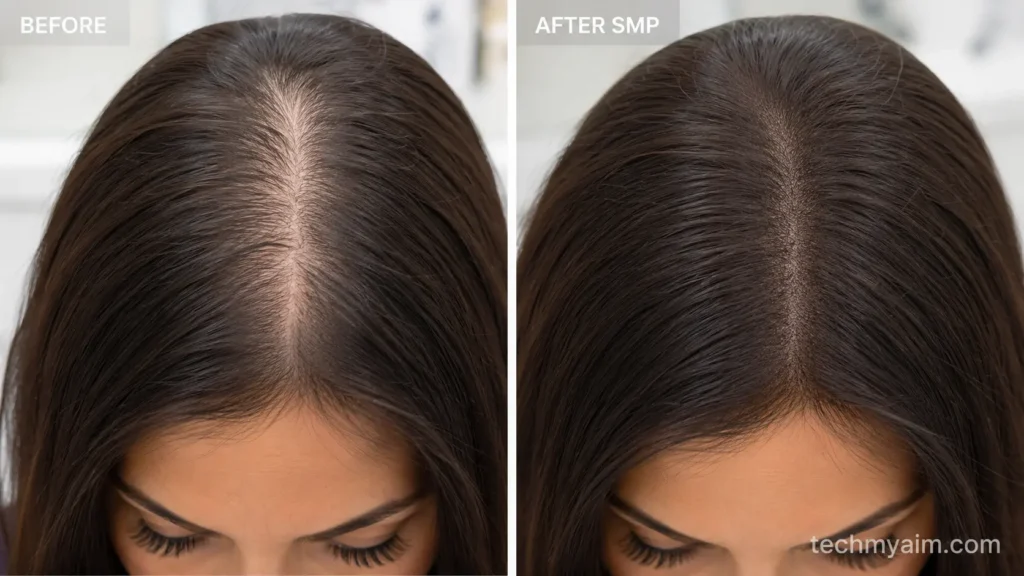
PRP is not a hair transplant. I want to be clear about that upfront.
But it belongs on this list because in 2026, PRP has become an essential component of female hair restoration — both as a standalone treatment for early-stage hair loss and as a critical enhancement to any surgical transplant procedure.
Here’s the science in plain language. A sample of your own blood is drawn, processed in a centrifuge to concentrate the growth-factor-rich plasma, and then injected directly into the scalp. These growth factors stimulate dormant follicles, increase blood supply to the scalp, and significantly enhance the survival and growth rate of transplanted follicles.
Stat Worth Knowing: A 2024 meta-analysis published in the Journal of Cosmetic Dermatology found that PRP therapy combined with hair transplantation improved graft survival rates by an average of 23% compared to transplantation alone. In my own clinic, this is now a standard component of every female transplant procedure.
PRP Therapy — Standalone vs. Combined Use
| Use Case | Protocol | Sessions Needed | Results Timeline |
|---|---|---|---|
| Standalone early hair loss | 3 sessions, 4 weeks apart | 3 initial + 1–2 maintenance/year | 3–6 months |
| Pre-transplant preparation | 1 session, 2–4 weeks before surgery | 1 | Improves donor area quality |
| Post-transplant enhancement | 1 session at time of procedure + follow-ups | 3–4 | Accelerates and enhances results |
| Maintenance after transplant | Every 6–12 months | Ongoing | Maintains and extends results |
6. Stem Cell Hair Transplant — The Cutting Edge of 2026 Restoration
This is the most exciting development in female hair restoration right now. And the one most women haven’t heard about yet.
Stem cell hair transplant technology — currently available at specialized clinics in the US, UK, Turkey, South Korea, and Spain — uses stem cells derived from the patient’s own adipose tissue (fat cells) or scalp tissue to regenerate hair follicles rather than simply relocating existing ones.
The critical distinction from traditional transplants: traditional transplants move existing follicles from one place to another, depleting the donor area. Stem cell approaches aim to multiply follicles — creating new ones from the patient’s own cellular material.
For women with diffuse thinning — who often have limited donor hair available for traditional transplantation — this technology is potentially game-changing.
Stem Cell Hair Transplant — Current Status in 2026
| Factor | Details |
|---|---|
| Availability | Specialized clinics only — not widely available |
| Regulatory status | Approved in some countries, clinical trial phase in others |
| Best candidate | Women with diffuse thinning, limited donor supply |
| Procedure type | Minimally invasive injection-based |
| Results timeline | 6–18 months |
| Cost range | $5,000–$25,000 depending on protocol |
| Longevity of results | Still being studied — early data very promising |
| Combination approach | Often combined with PRP and standard FUE |
Expert Rule: If a clinic is offering stem cell hair transplants and guaranteeing dramatic results at very low cost — walk away. This technology is genuinely promising but still evolving. Reputable clinics offering stem cell protocols will discuss realistic expectations, current evidence, and the investigational nature of some protocols honestly. Guaranteed miracle results from any hair procedure is a red flag regardless of the technique.
7. Scalp Micropigmentation (SMP) — The Non-Surgical Alternative Worth Knowing
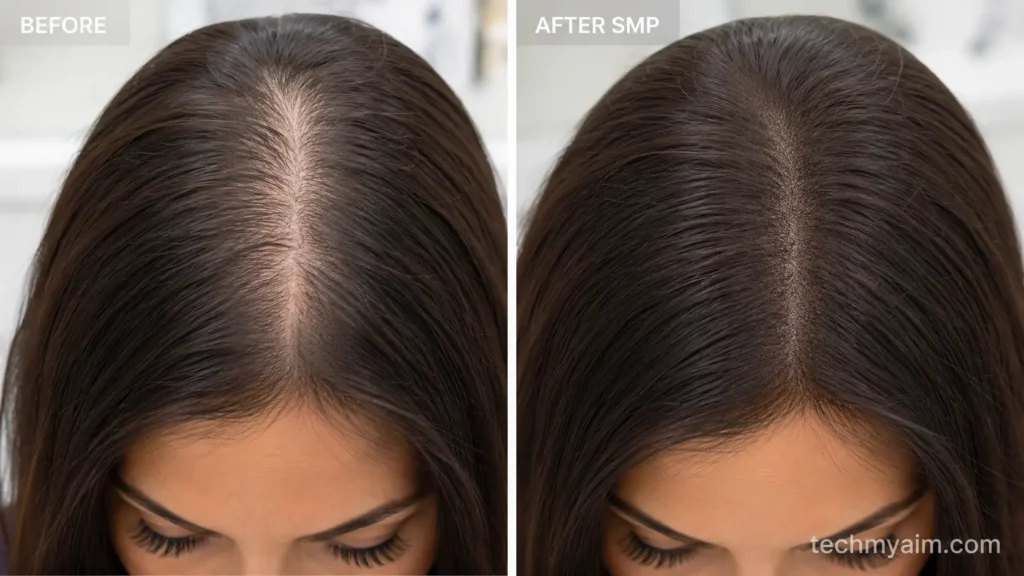
SMP is the most misunderstood option on this list. And consistently one of the most transformative for the right candidate.
Scalp Micropigmentation is not a hair transplant. It does not grow hair. What it does is use specialized pigments applied to the scalp with micro-needles to create the precise appearance of hair follicles — adding the illusion of density, coverage, and a defined hairline without any surgery at all.
For women with diffuse thinning where transplant candidacy is limited, for women who want to camouflage transplant scars, or for women who want to add the appearance of density to thinning areas between transplant sessions — SMP is an extraordinary tool.
And in 2026, the techniques and pigments available for women specifically have advanced significantly. Female SMP now focuses on density illusion rather than shaved head appearance — creating the look of fuller, thicker hair rather than a closely cropped style.
SMP for Women — What It Can and Cannot Do
| SMP Can | SMP Cannot |
|---|---|
| Create illusion of hair density | Grow actual new hair |
| Define and restore hairline appearance | Replace hair transplant results |
| Camouflage transplant scars | Achieve results on very dark or oily scalps easily |
| Add appearance of fullness to part lines | Last forever without touch-ups |
| Work on all skin tones and hair colors | Be removed easily if disliked |
| Be combined with transplant procedures | Substitute for treatment of underlying hair loss |
Insider Tip: The most powerful use of SMP I’ve seen in my clinic is as a complement to FUE transplantation — not a replacement. A woman gets her FUE transplant for actual hair growth and density, then uses SMP 12–18 months later to fill in any remaining low-density areas between the transplanted follicles. The combined result looks completely natural and significantly more dramatic than either approach alone.
How to Choose the Right Hair Transplant Option — My Clinical Decision Framework
After 12 years and hundreds of female consultations, here is how I guide women through this decision.
Step 1 — Diagnose the Cause First
Never skip this. Ever. Bloodwork, scalp biopsy if needed, complete hormonal panel. Understanding why you’re losing hair determines whether surgery is appropriate at all.
Step 2 — Assess Donor Supply
This is the single most important factor in female transplant candidacy. Women with diffuse thinning often have compromised donor areas — which limits traditional transplant options. An experienced trichologist or surgeon will assess donor density honestly.
Step 3 — Define Your Primary Goal
| Goal | Best Option(s) |
|---|---|
| Hairline restoration | DHI, FUE long-hair technique |
| Crown density | FUE, DHI, PRP combination |
| Large area coverage | FUT, combined FUT+FUE |
| Diffuse thinning with limited donor | PRP standalone, SMP, stem cell (if eligible) |
| Scar camouflage | SMP, FUE over scar tissue |
| Non-surgical improvement | PRP, SMP |
| Maximum precision | ARTAS robotic, DHI |
Step 4 — Research and Vet Your Surgeon
This cannot be overstated. Female Hair Transplant requires specific expertise that not every hair surgeon has. Men have been the primary focus of hair transplant development historically. A surgeon who primarily works with male patients may not understand female hair loss patterns, hairline aesthetics, or the psychological dimensions of female hair loss.
Ask specifically:Hair Transplant
- What percentage of your patients are women?
- Can I see a portfolio of female patients at 12–18 months post-procedure?
- What is your approach if my results are not as expected?
- Do you offer combined PRP therapy with transplantation?
Step 5 — Understand the Full Timeline
| Phase | Timeline | What Happens |
|---|---|---|
| Initial consultation | Week 0 | Assessment, candidacy determination |
| Pre-op preparation | 2–4 weeks before | Blood work, PRP prep if included |
| Procedure day | Day 0 | 4–10 hours depending on technique |
| Initial healing | Days 1–14 | Redness, scabbing, sensitivity |
| Shock loss phase | Weeks 2–8 | Transplanted hairs shed — this is normal |
| Early regrowth | Months 3–6 | Fine new hairs begin emerging |
| Significant results | Months 6–12 | Density and length becoming visible |
| Full results | Months 12–18 | Complete outcome assessable |
Expert Rule: The shock loss phase — where transplanted hairs shed in weeks 2–8 — is the phase that distresses women most. It looks like the procedure has failed. It has not. This shedding is completely normal and is actually a sign that the follicles are cycling correctly. Every patient I’ve consulted goes through it and every one of them panics slightly. I tell them all the same thing: trust the follicle. It knows what it’s doing.
The Real Costs of Female Hair Transplant in 2026 — What Nobody Puts in the Brochure
Let’s talk money honestly.Hair Transplant
The procedure cost is only part of the actual investment.
| Cost Component | Estimated Range |
|---|---|
| Primary procedure (FUE, DHI, etc.) | $4,000–$20,000 |
| Pre-operative PRP session | $500–$1,500 |
| Post-operative PRP sessions (3 recommended) | $1,500–$4,500 |
| Specialized post-op shampoos and treatments | $200–$500 |
| Follow-up consultations | $200–$600 |
| Possible second procedure (touch-up) | $2,000–$8,000 |
| Time off work (5–14 days typically) | Variable |
| Total realistic investment | $6,400–$35,000+ |
Insider Tip: Turkey has become one of the world’s most popular destinations for hair transplant tourism — offering procedures at 60–70% lower cost than the US or UK with several genuinely world-class clinics. However, quality varies enormously. If considering Turkey or any medical tourism destination, research obsessively — look for ISHRS-affiliated surgeons, verify before-and-after portfolios independently, and factor in travel, accommodation, and the reality of managing post-operative care away from home.
Questions Every Woman Should Ask Before Booking a Consultation
Don’t walk into any clinic without these:Hair Transplant
- “What is my specific hair loss diagnosis and is it stable?”
- “Am I a good candidate for surgery right now — and if not, why not?”
- “What technique do you recommend for my specific loss pattern and why?”
- “How many female patients do you treat annually?”
- “What does my realistic outcome look like — not the best case?”
- “What happens if I’m not satisfied with my results?”
- “Do you offer a second procedure guarantee or revision policy?”
Any surgeon who cannot answer these questions clearly and honestly is not the surgeon for you.
You deserve your hair back. Full stop. Not because appearance is everything — but because for so many women, hair is identity. It’s confidence. It’s the ability to walk into a room without a hat and feel completely, unguardedly yourself.
The technology exists in 2026 to make meaningful, real, lasting change for the right candidate. And the first step — like almost everything in medicine — is simply having the right information and asking the right questions.
You have both now. The rest is yours.Hair Transplant
Frequently Asked Questions (FAQ)
How do I know if I have enough donor Hair Transplant for a female hair transplant?
Donor hair adequacy is assessed during a clinical consultation using a dermoscopy or trichoscopy examination of the donor area — typically the back and sides of the scalp. Your surgeon will measure follicular density (follicles per square centimeter), hair shaft diameter, and the ratio of terminal to vellus hairs in the donor zone. The minimum generally considered adequate for FUE transplantation is approximately 40–50 follicular units per square centimeter in the donor area. Women with diffuse thinning — where loss affects the entire scalp including the traditional donor zone — may have insufficient donor supply for standard transplantation, which is why a thorough assessment before any procedure commitment is absolutely non-negotiable. A reputable surgeon will tell you honestly if your donor supply is inadequate rather than proceeding with a procedure that cannot deliver meaningful results.
What is the recovery process like for women after a hair transplant and when can I return to normal activities?
Recovery varies by technique but follows a broadly similar timeline across FUE, DHI, and FUT. Days 1–3 involve tenderness, some swelling around the forehead and temples, and the beginning of small scabbing at the implantation sites — this is completely normal. Days 4–10 see the scabs beginning to resolve and initial redness fading. Most women can return to desk-based work within 5–7 days and resume light exercise by day 14. The hair washing protocol is critical — most surgeons provide a specific gentle washing technique starting 48–72 hours post-procedure to protect grafts while keeping the scalp clean. The shock loss phase between weeks 2–8 — where transplanted hairs shed before regrowing — is emotionally the hardest part of recovery for most women, but it is a completely normal part of the follicular cycle and not a sign of failure.