



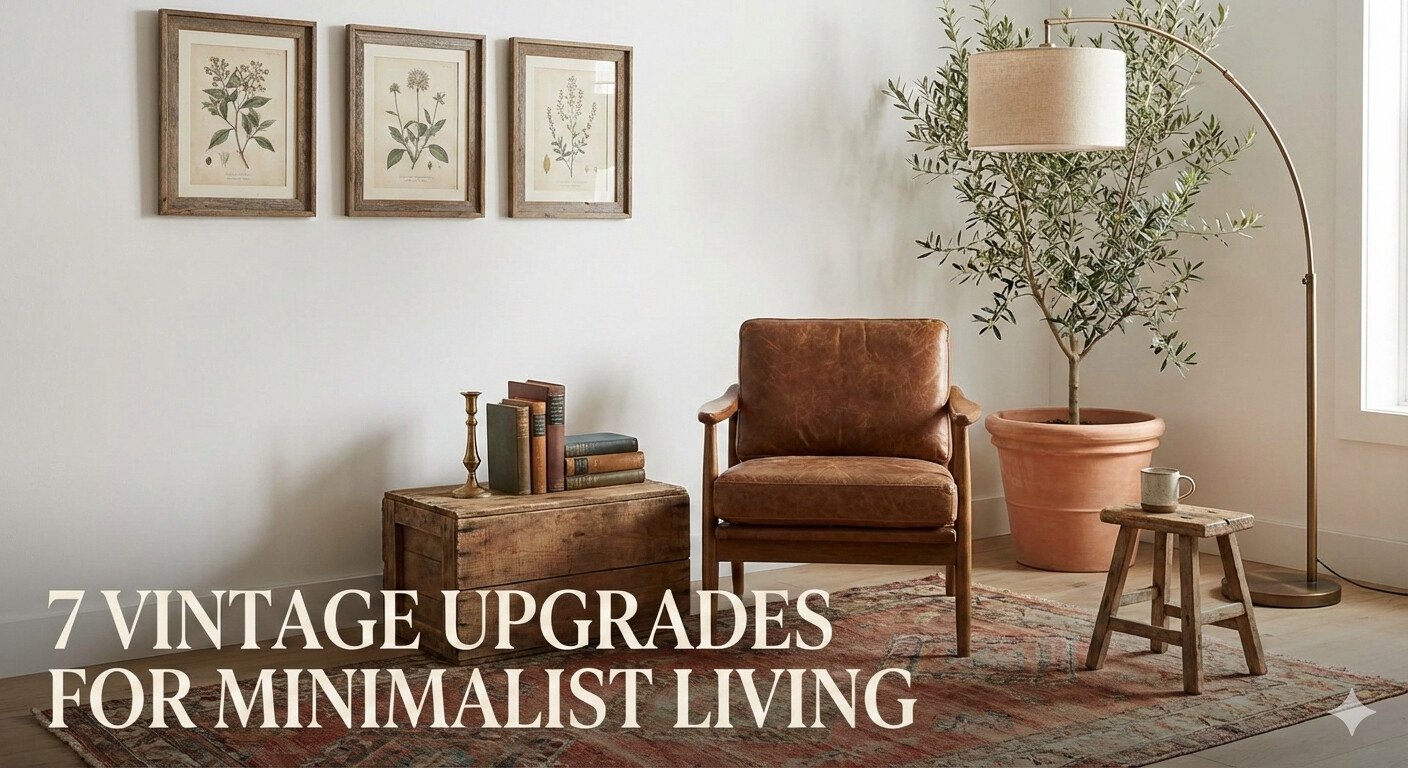
You want that clean, zen vibe—but with a little soul, right? Minimalist living doesn’t have to feel cold or bare. With a few smart vintage upgrades, you can keep the clutter out and the character in. Think: fewer pieces, bigger impact, and stories baked into every corner.
1. Edit Ruthlessly, Then Add One Hero Vintage Piece
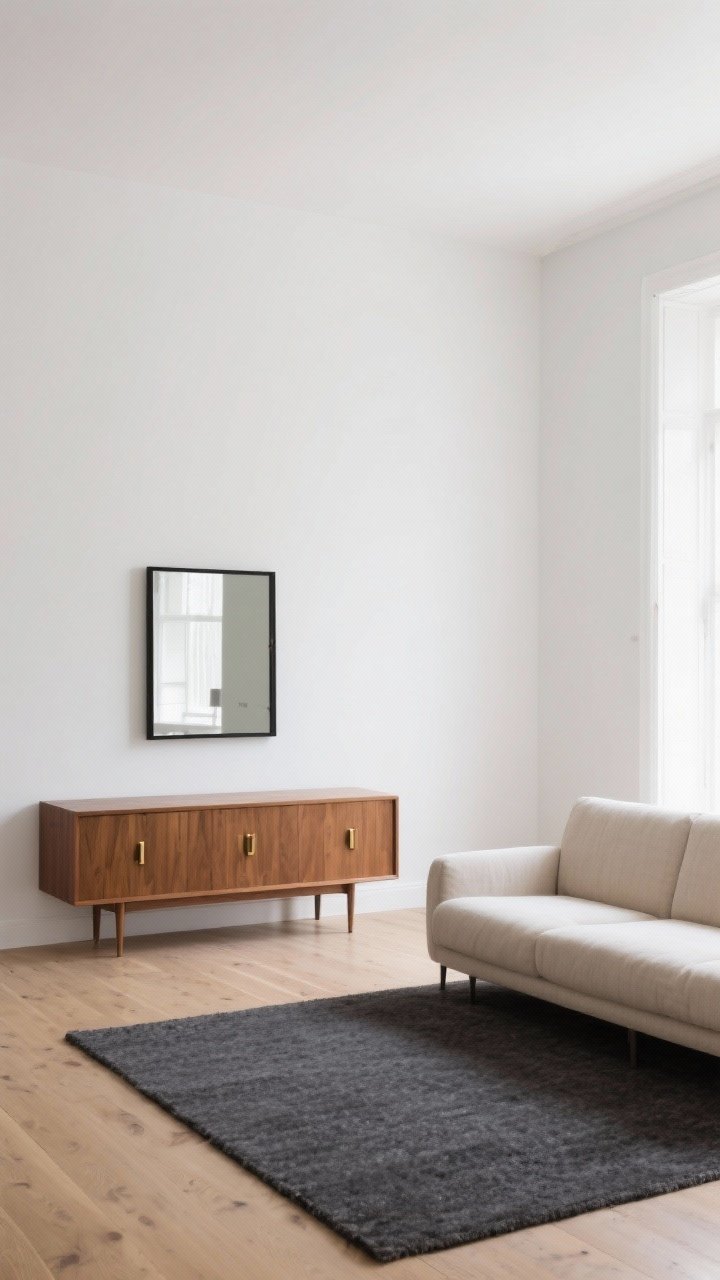
Start with subtraction. Clear surfaces, tuck away extras, and give every item a job. Minimalism thrives on breathing room. Then—here’s the magic—add one hero vintage piece that anchors the space.
What makes a great hero piece?
- Scale: A vintage credenza, oversized antique mirror, or mid-century lounge chair.
- Shape: Clean lines with subtle patina (think teak, oak, or brass details).
- Function: Storage or seating, so it earns its keep.
One bold vintage element keeps the room interesting without tipping into “flea market exploded.” IMO, this is the fastest way to get that effortless-curated look.
2. Keep the Palette Calm, Let Patina Shine
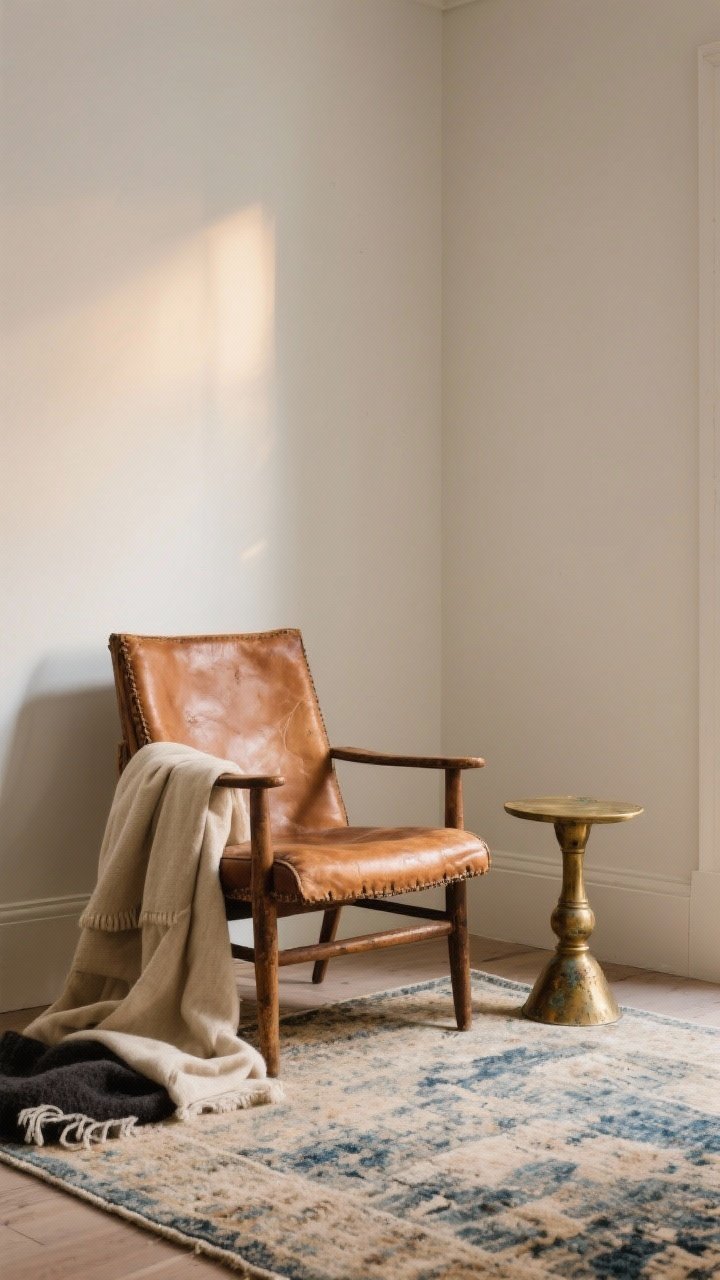
Minimalism loves neutrals. Vintage loves character. Put them together and you get calm, collected spaces where the patina does the talking. Use a tight palette—creamy whites, warm grays, soft blacks—and let the vintage piece bring the story.
Color strategy that works
- Walls: Off-white with a warm undertone to flatter wood and brass.
- Textiles: Linen, wool, and cotton in sand, bone, and charcoal.
- Accent: One muted color (sage, rust, or indigo) pulled from a vintage rug or art.
FYI: Restraint is your friend. A refined backdrop makes a weathered cabinet or aged leather chair feel intentional, not random.
3. Mix Clean Lines With Old-World Materials
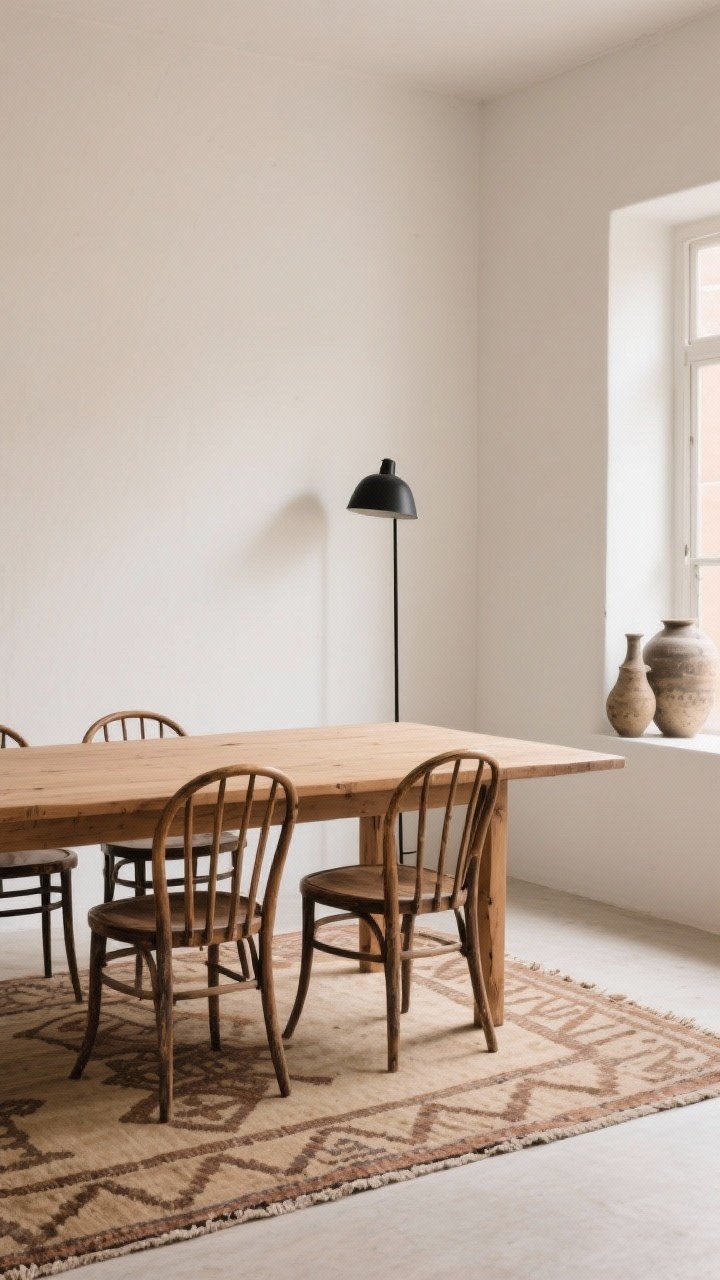
Want instant visual chemistry? Pair modern silhouettes with timeworn materials. It’s that high-low tension that feels design-y without trying too hard.
Pairing ideas that never fail
- Modern sofa + vintage rug: Flat-woven Turkish or Persian, low pile, simple pattern.
- Minimal table + antique chairs: A simple slab dining table with bentwood or spindle-back chairs.
- Sleek lamp + stoneware: A slim black floor lamp beside chunky vintage pottery.
Keep lines simple, and let textures do the heavy lifting. It’s like wearing a crisp white tee with a killer vintage watch—effortless win.
4. Curate Mini Vignettes, Not Clutter
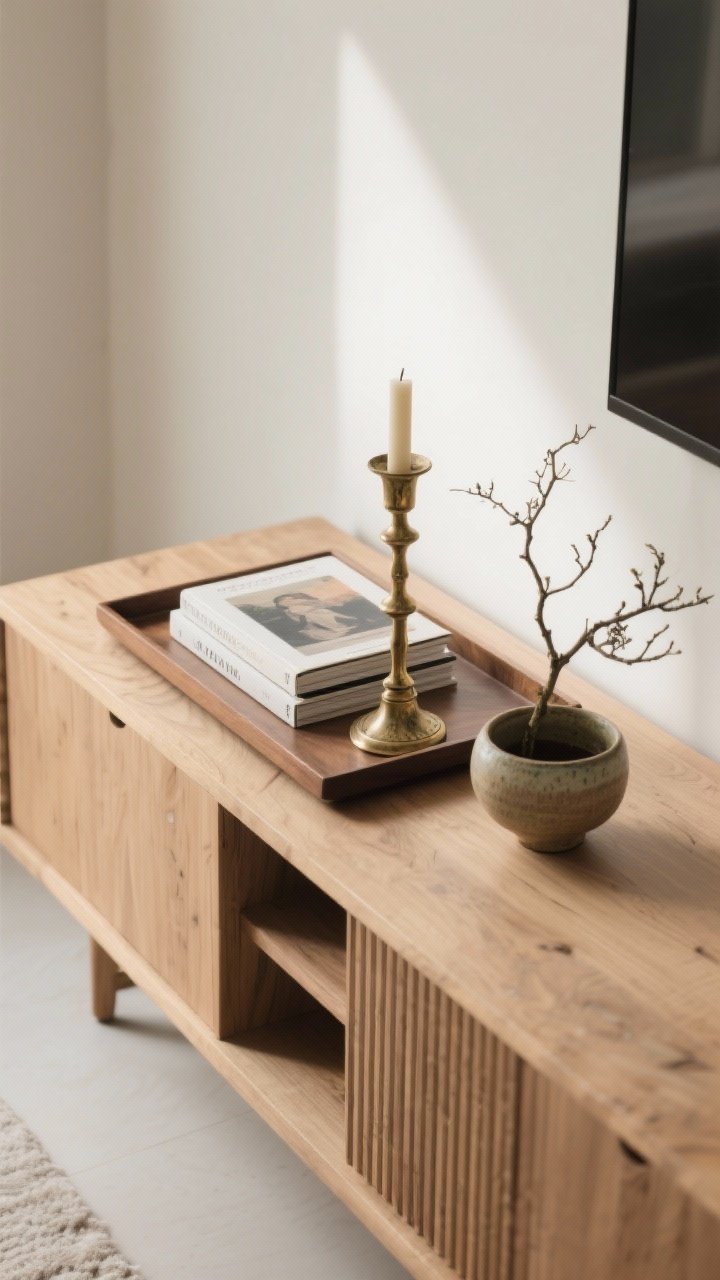
Display is everything. Instead of scattering little things everywhere (chaos!), create tight vignettes that tell a story. One per surface, max.
Vignette recipe
- Anchor: A stack of two books or a low tray.
- Character: A vintage object—brass candlestick, carved box, or ceramic bowl.
- Life: A small plant, branch, or tiny ikebana moment.
Rotate pieces seasonally so it always feels fresh. And yes, you can keep sentimental items—just edit them like a gallery curator. Less is luxe.
5. Upgrade Lighting With Old-School Charm
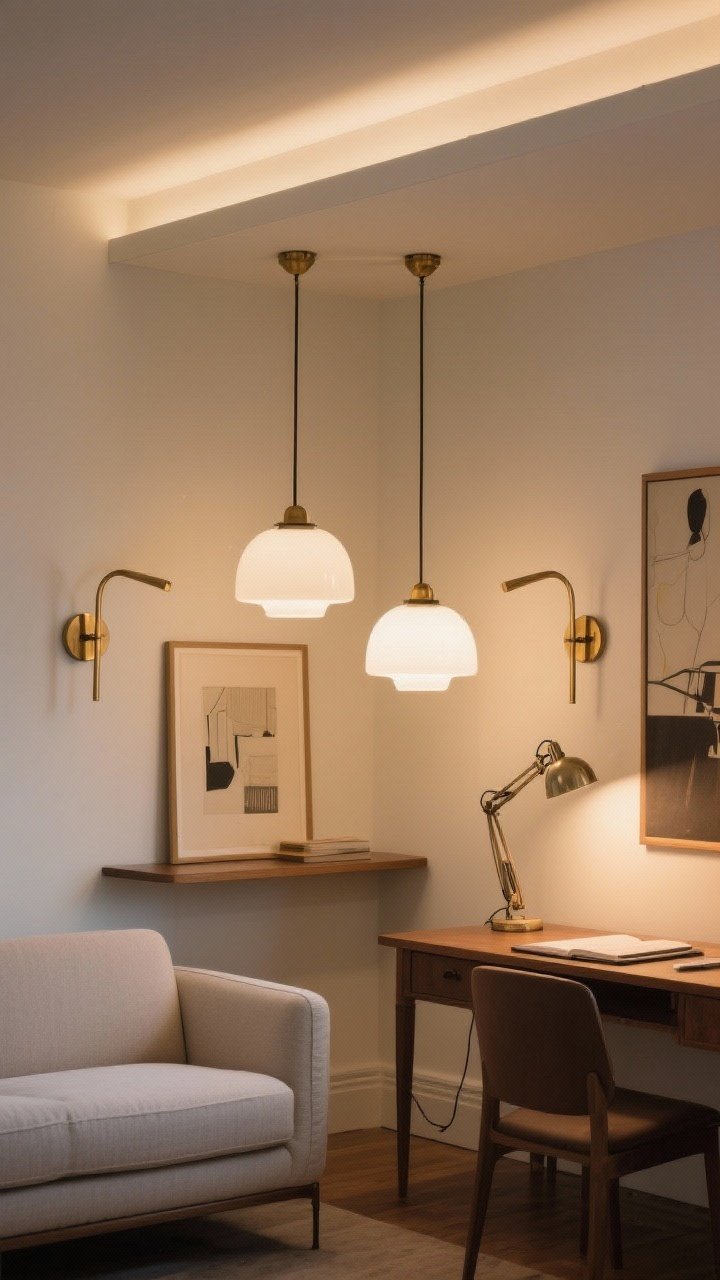
Lighting is the difference between “nice” and “wow.” Swap builder-grade fixtures for vintage or vintage-inspired lighting with clean profiles and warm finishes.
Lighting that elevates instantly
- Milk glass pendants: Soft glow, simple silhouette—perfect over tables.
- Bauhaus or mid-century sconces: Brass or matte black, directional and chic.
- Banker’s or articulating desk lamps: Turn a work zone into a design moment.
Layer light: ambient overhead, task for reading, and a soft accent light. Warm bulbs (2700–3000K) keep vintage textures feeling cozy, not clinical. FYI: Dimmers are your secret weapon.
6. Bring In Vintage Storage That Works Hard
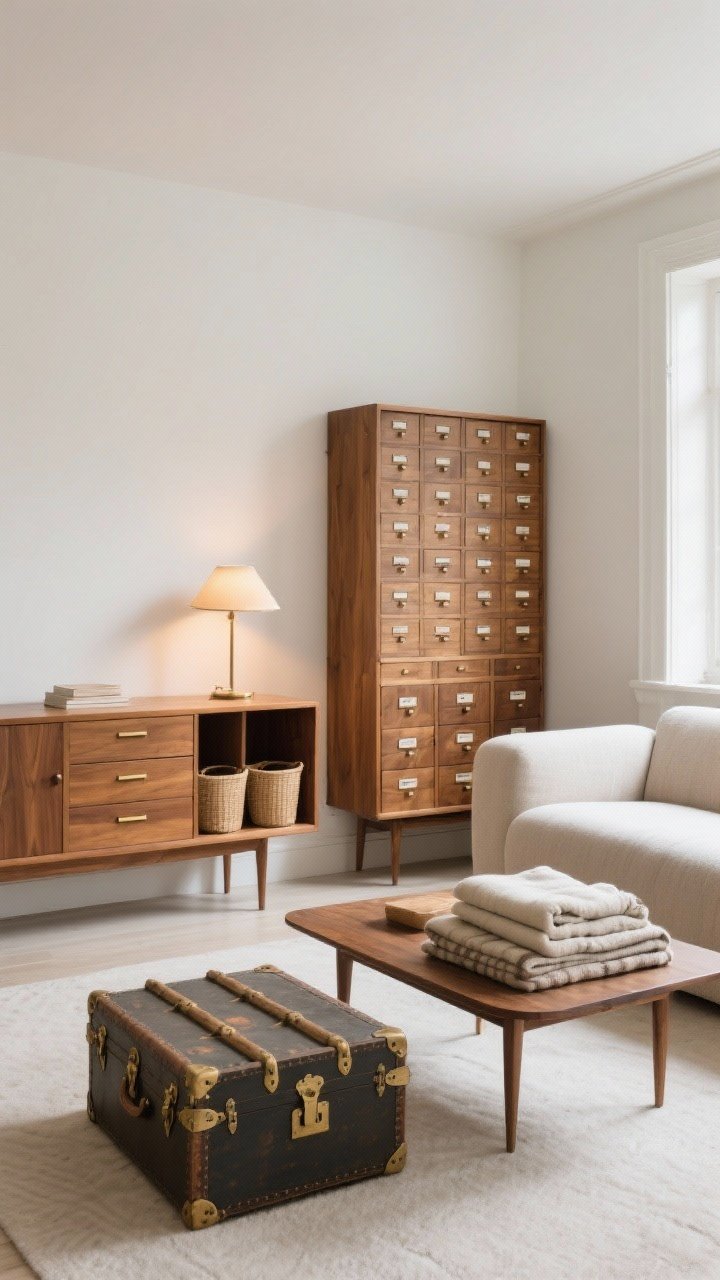
Minimalism isn’t about owning nothing—it’s about hiding the chaos. Choose vintage storage that’s both pretty and practical. Bonus points if it has doors.
Storage pieces that pull their weight
- Mid-century credenzas: Glide-y drawers, lots of space, timeless lines.
- Apothecary cabinets: Tons of tiny drawers for office or craft supplies.
- Antique trunks: Coffee table + blanket storage = perfect twofer.
Inside, use bins and labels so everything has a home. On top, keep surfaces 70% clear. That negative space? It’s doing heavy design lifting.
7. Choose Art With History, Display It Clean
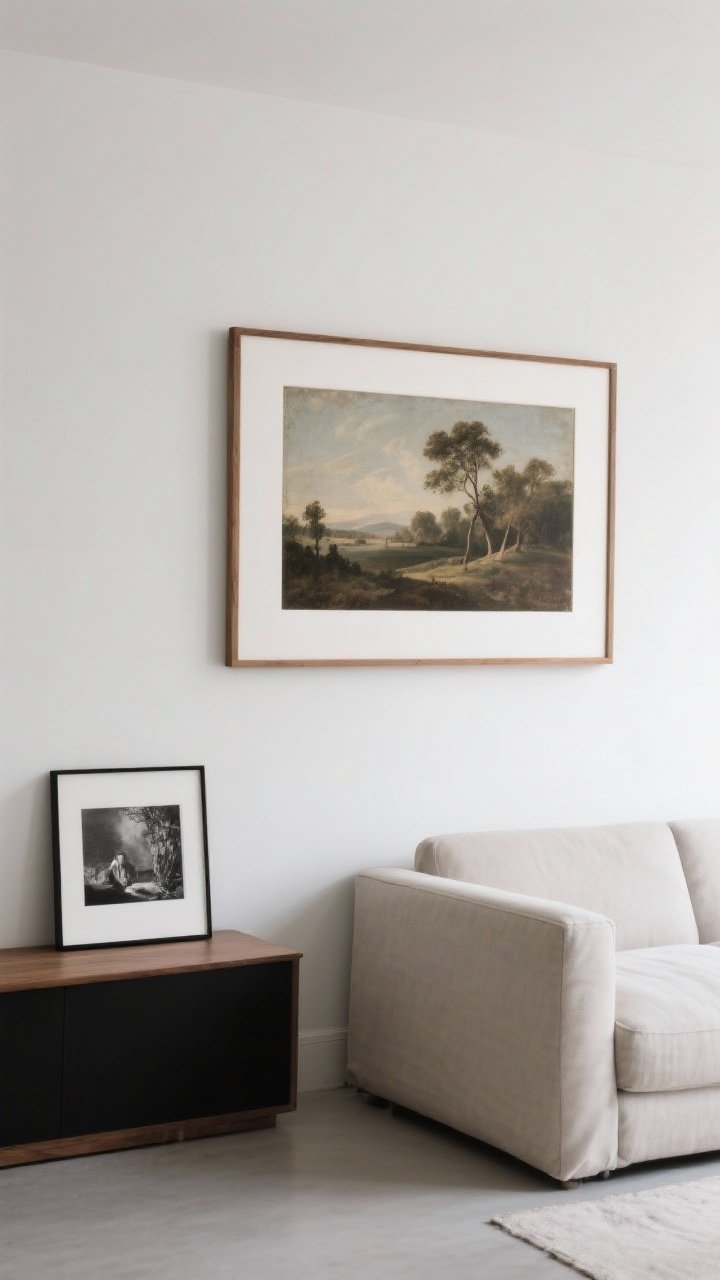
Art doesn’t have to be loud to be impactful. Look for vintage pieces with quiet charisma: charcoal sketches, old oil landscapes, typography prints, or black-and-white photography. Then frame them simply so the room still reads minimalist.
How to make vintage art feel modern
- Frames: Thin black, white, or natural wood with generous mats.
- Scale: One large piece over a sofa or bed beats a cluttered gallery wall.
- Placement: Hang at eye level, and keep spacing consistent for calm vibes.
Leaning art on a console or shelf keeps things flexible—edit and swap without committing to a wall of holes. Your future self will thank you.
Pro Sourcing Tips (Because The Good Stuff Goes Fast)
- Keywords matter: Search “mid-century credenza,” “vintage teak,” “bentwood chair,” “milk glass pendant.”
- Condition over age: A well-made piece with minor wear beats a rare piece that’s falling apart.
- Measure twice: Check doorways, hallway turns, and elevator limits. Ask me how I know.
- Sample the finish: If you plan to oil or wax wood, test in an inconspicuous spot first.
Care And Maintenance (So Your Finds Age Gracefully)
- Wood: Dust with a dry cloth; feed with a natural oil or wax a few times a year.
- Brass: Polish lightly or embrace the patina—both are chic.
- Rugs: Rotate seasonally; vacuum with a gentle setting; use a rug pad to reduce wear.
- Upholstery: Consider reupholstering in linen or wool for durability and a minimalist look.
Here’s the big picture: minimalist rooms get their personality from texture, material, and form—not from tons of stuff. Vintage decor brings the soul, and minimalism keeps the calm. Put them together, and you get spaces that feel curated, warm, and totally yours.
Ready to edit, then elevate? Start with one hero piece and a calmer palette, and watch your room snap into focus. You’ve got this—now go make your space quietly stunning.