





I’ve seen couples shake, cry, laugh, and absolutely nail it. I’ve also seen a groom pull a crumpled bar napkin from his pocket and read three lines that somehow made the whole room melt. That’s the magic of vows on the wedding day. No choreographed dance, no expensive floral arch. Just words.
And honestly? Most people overthink them into something stiff and forgettable. You don’t need to be a poet. You need to be you. As a senior planner who’s stood beside hundreds of couples right before they walk down that aisle, I’m going to walk you through exactly what works, what flops, and how to write something that still makes your spouse cry happy tears a decade later.
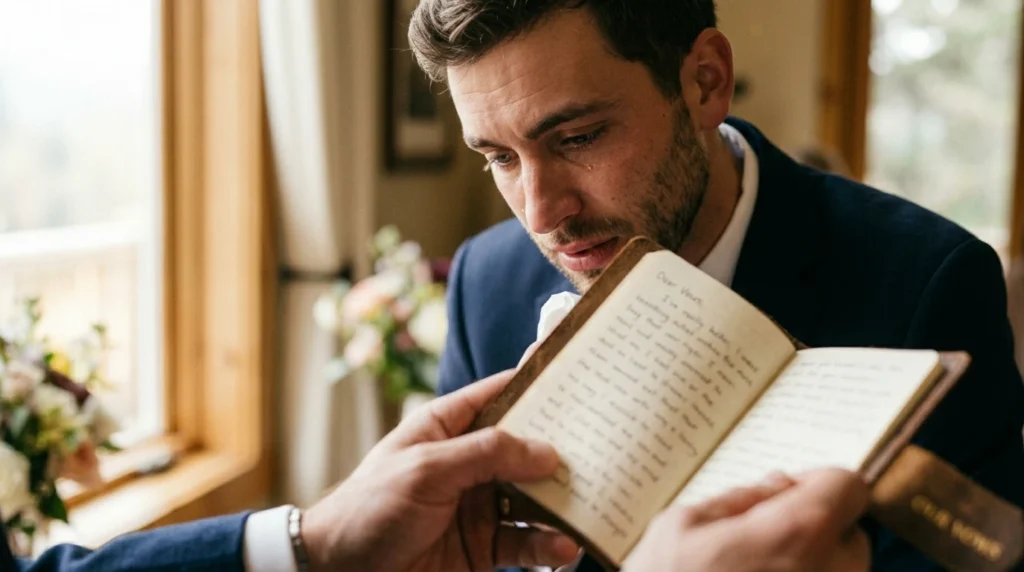
This isn’t a template. It’s a road map built from real Vows on Wedding, real tears, and zero fluff.
BUY NOW Vows on Wedding CLICK HERE
How Do You Write Your Own Wedding Vows?
You start by forgetting the whole “vows” word for a second. Sound strange? It’s the single best trick I know. The moment you tell your brain you’re writing vows, it panics and serves up clichés. So don’t write vows yet. Write a tiny story.
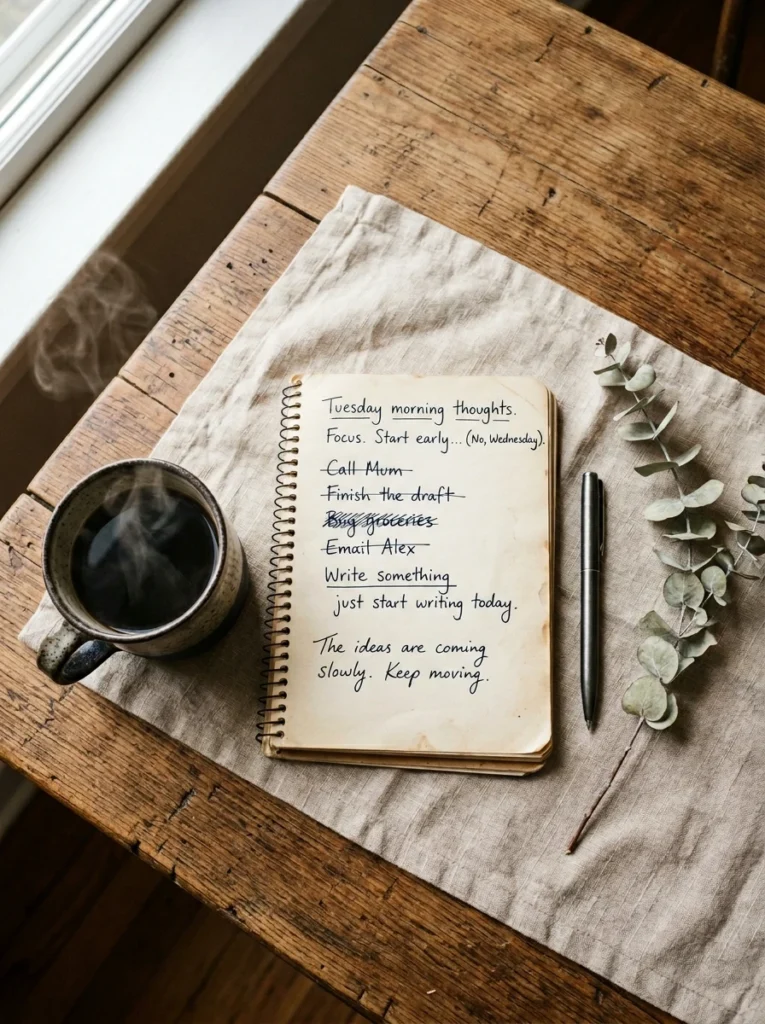
The absolute best vows I’ve witnessed began as a memory scribbled in a notes app. The couple later shaped that memory into a promise. That’s the core secret.
Grab a Note and Split It in Two
Don’t stare at a blank page. Create two messy lists.
- List One: A specific moment you knew. Not “I love you,” but the exact scene. The way they handed you coffee without asking. Their panic when they lost their keys. That ridiculous laugh.
- List Two: The little things you’ll actually do. I’ll never let you watch the season finale alone. I’ll learn to make that pasta even though I burn toast.
Now connect them. That memory becomes the “because.” That small promise becomes the “so I will.” That’s a vow.
What Should You Say in Wedding Vows?
Anchor it in something real and specific. Genuine details are your best friend. Say what you’ve observed about this person that nobody else notices.
A safe, working structure, many of my couples swear by, looks like this.
- A concrete anchor: “The day you drove two hours just to bring me soup…”
- A quality that stems from it: “I saw then that you show up. Quietly, without fanfare.”
- A forward-looking promise rooted in that quality: “I vow to show up for you with that same quiet certainty, especially on the messy days.”
Don’t list adjectives. Nobody wants to hear “you’re kind, smart, and funny” for the hundredth time. Tell me the proof.
How Long Should Wedding Vows Be?
Between one and two minutes. Read aloud. That’s your ironclad boundary. Any longer and guests start shifting. The flower girl gets bored. Your partner zones out because they’re trying to memorize your face, but now they’re also worrying about the cocktail hour.
I’ve timed this. One minute is roughly 150-175 words. Two minutes push 300. That’s not long. It’s enough for two solid, well-drawn promises and one vivid memory. If you’re both speaking, aim for a similar length so the moment feels balanced.
Studio secret: Record yourself on your phone reading it with the exact pauses you plan to use. Listen back. You’ll catch awkward phrasing and feel the real time. Almost every couple I’ve worked with cuts a line after doing this. Your ear is smarter than your eye.
When Do You Say Vows at the Wedding Ceremony?
Right after the officiant’s address to the couple, and just before the ring exchange. That’s the classic flow. It’s the emotional peak.
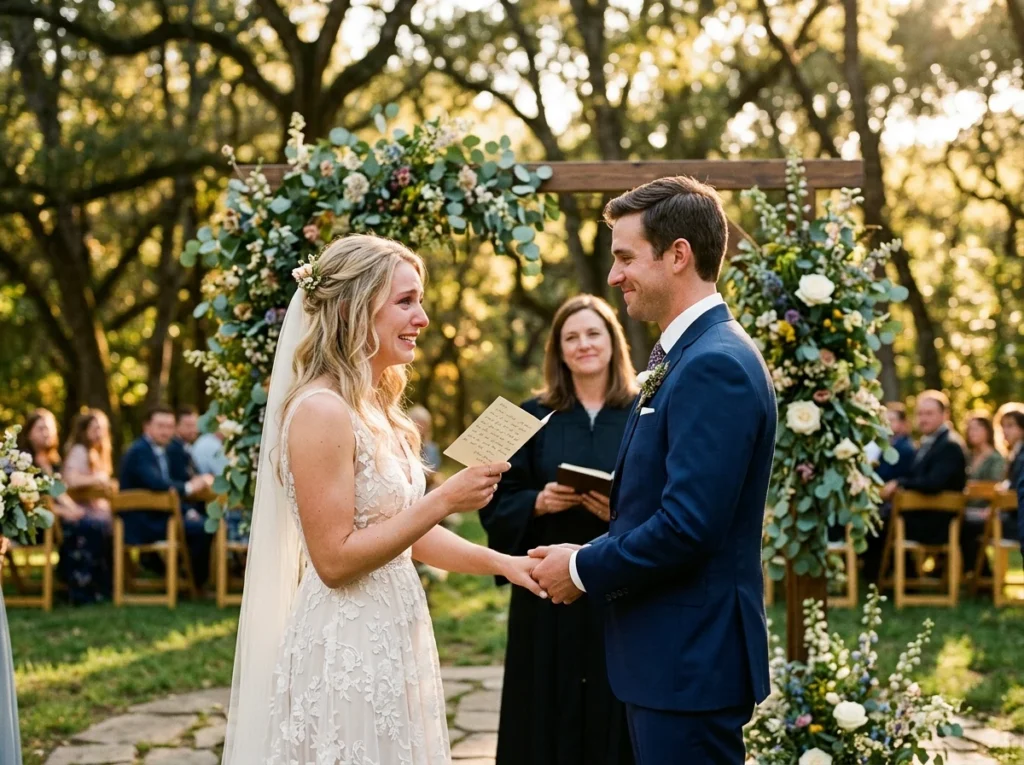
But here’s what nobody tells you. The placement dictates your tone. If you’re going deeply personal and maybe a bit emotional, you need the officiant to set the room properly. A quick, calm nod from them can give you the breath you need. Tell your officiant this beforehand. They’ll build a soft landing pad.
If you’re doing a first look, some couples now opt to read private vows to each other alone, then use a shortened traditional repeat-after-me format in front of guests. This is a beautiful way to protect raw words. Because let’s be real—saying the guttural, ugly-cry stuff in front of your boss and great-aunt can feel like a performance.
Can You Mix Traditional and Personal Vows?
Absolutely. And I see it all the time. The ceremony feels anchored, but still purely yours.
The smoothest method is to do the legal or religious “I do” questions first. That satisfies the contractual and spiritual elements. Then you immediately shift into personal remarks. You say, “I’d like to add my own words,” and speak for your minute.
Here’s a clean way to blend them without the ceremony feeling disjointed.
- The officiant leads the traditional declaration of intent. (“Do you take this person…”)
- You respond. (“I do.”)
- Officiant says a bridging line like, “They have prepared personal words as a sign of that commitment.”
- You speak your vows.
- Rings follow.
Never cram the personal into the ring exchange wording. It gets messy. I’ve seen rings dropped because someone’s trying to recite a paragraph while sliding a band onto a trembling finger.
What Are the Most Common Mistakes Couples Make With Their Vows on Wedding?
They aim for the whole relationship in 120 seconds. They try to cover everything. It becomes a blur. Or they Google “vow examples” late the night before and stitch together sentences that sound beautiful but mean nothing personal.
Another huge mistake? Memorizing under pressure. Unless you’re a performer, don’t put that on yourself. Holding a vow book a simple, elegant booklet looks beautiful in photos. It grounds your hands. It saves you from that panic spiral if you choke up. Even if you know every word by heart, hold the paper. Your body will thank you. Vow renewal ceremony script for couples who eloped.
And don’t make wild, unkeepable promises. “I’ll always make you laugh” is sweet and impossible. Promise the effort, not the result. Promise patience in the struggle. Promise to be clumsy in trying.
How Can You Beat Vow-Writing Anxiety Right Before the Ceremony?
You accept the nerves. That’s first. Your body isn’t sabotaging you; it’s preparing you for a huge moment. Then you do something with your hands.
Before the ceremony, steal ten minutes alone. Breathe slowly while reading your vows one last time, not to memorize, but to visit the feeling. Many of my clients place a small note at the top of their paper: “Look up. Breathe. It’s just them.” It’s a final instruction to yourself.
And because you’re wondering—yes, a glass of water nearby. Not champagne. A dry mouth can ruin your articulation. I’ve placed a tiny water bottle behind the altar more times than I can count.
How Do You Coordinate Vows With Your Partner Without Spoiling the Surprise?
You don’t have to share the words. But you must share the guardrails. Set the same word count. Agree on the overall temperature: humorous and light? Deep and tender? Both? You don’t want one person delivering a stand-up routine while the other is pouring out their soul.
I’ve mediated this in a dozen planning sessions. The phrase “same length, same depth” is a good rule. Text a friend who’s seen both drafts if you need a confidential tone-check. That friend can tell you, “Yours is lovely but feels like a poem; theirs is a love letter. Meet in the middle.”
This tiny coordination prevents a weird emotional mismatch that guests definitely feel.
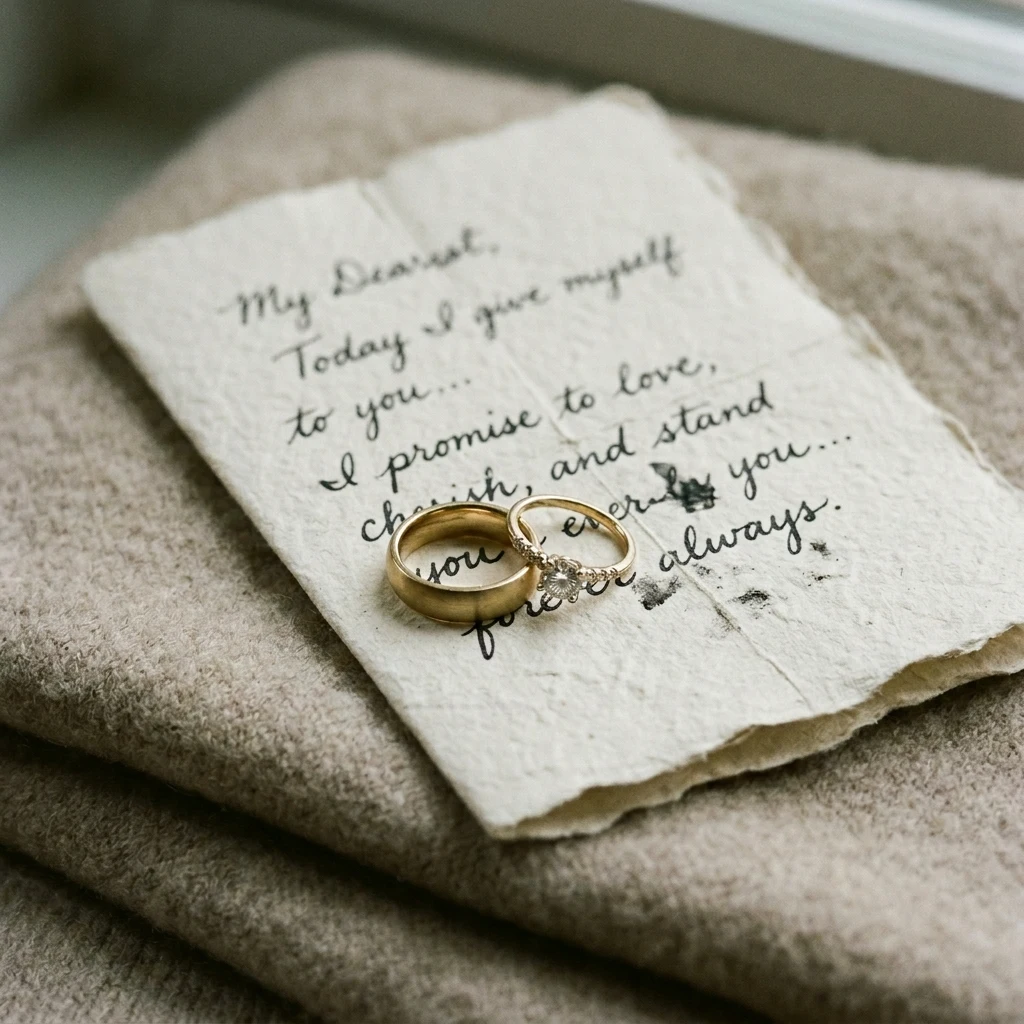
The vows you write aren’t for the ’gram. They’re not for the applause. They’re a small, stubborn anchor you drop in the middle of one massive, swirling day. A moment of pure, unpolished truth. Go make your partner’s eyes sting. You’ve got this.