





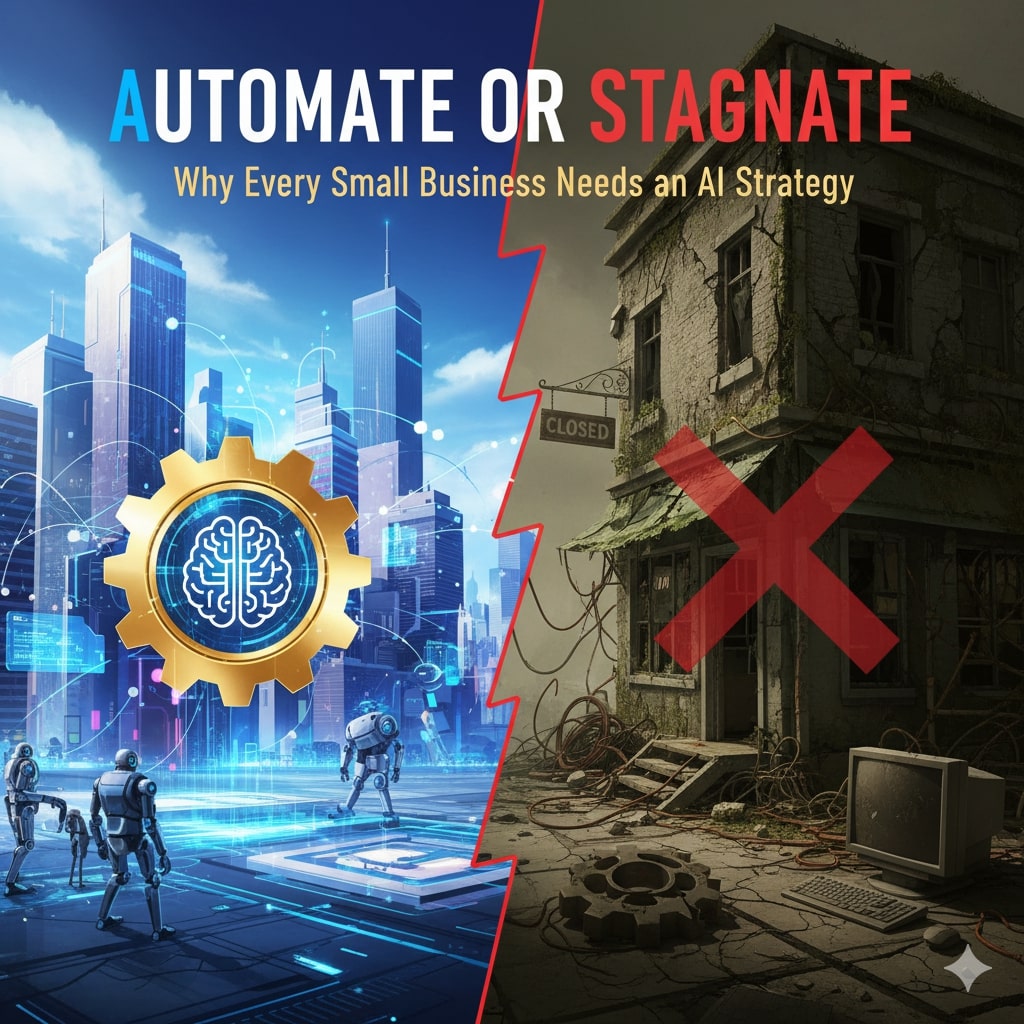
In today’s fast-paced digital economy, small businesses face mounting pressure to keep up with rapidly evolving technologies and increasingly sophisticated customer expectations. The choice facing these businesses is clear: automate their operations with artificial intelligence (AI) or risk stagnating and losing competitive edge. This article explores why every small business must prioritize an AI strategy, the tangible benefits of embracing AI and how to implement it effectively for sustainable growth.
The Digital Shift Making AI Essential for Small Businesses
Over the past decade, AI has moved beyond being a futuristic concept to becoming a critical driver of business efficiency and innovation. Large enterprises have long leveraged AI to streamline workflows and optimize decision-making. Now, small businesses can no longer afford to ignore these advances. With AI tools becoming more accessible and affordable, small businesses stand to gain significantly by automating repetitive tasks, analyzing data to inform decisions and enhancing customer engagement.
Research shows that around 80% of small businesses adopting AI report increased productivity and 91% cite revenue growth attributed to AI applications. Moreover, AI enables small businesses to compete with larger players by leveling the technology playing field. Unlike big corporations, small companies can implement AI swiftly and pivot quickly in response to market changes—a distinct advantage in volatile economic environments.
Key Benefits of an AI Strategy for Small Businesses
1. Automate Time-Consuming Tasks
Small businesses often operate with limited resources and staff wearing multiple hats. AI-powered automation frees up valuable employee time by handling routine and repetitive tasks such as data entry, invoicing, appointment scheduling and customer service inquiries. or example, AI chatbots provide instant customer support 24/7, reducing wait times and improving satisfaction without increasing overhead costs.
2. Improve Decision-Making with Data Insights
AI tools can analyze vast datasets faster and more accurately than humans, uncovering trends and patterns that inform better business decisions. For instance, AI analytics can identify customer buying behaviors, optimize inventory management and forecast demand. These insights empower small businesses to tailor offerings, reduce waste and increase profitability.
3. Enhance Marketing and Customer Engagement
Marketing remains a challenge for many small businesses due to budget constraints and time limitations. AI simplifies marketing by automating campaign management, personalizing content based on customer data and optimizing SEO strategies. With AI-generated marketing copy, social media posts, and email campaigns, small businesses can maintain consistent brand messaging and attract qualified leads.
4. Reduce Human Errors and Operational Risks
Human errors can be costly, especially for small businesses with tight margins. AI systems operate with high accuracy and consistency, significantly reducing mistakes in areas like accounting, compliance and inventory tracking. This reliability not only saves money but also builds trust with customers and partners.
5. Operate Around the Clock
AI-powered systems never sleep. Whether through automated customer interactions or continuous data monitoring, AI tools ensure a business remains operational and responsive 24/7. This capability is vital for businesses serving global markets or customers across different time zones.
Real-World Applications of AI in Small Business
Automated Customer Service and Support
Chatbots and virtual assistants powered by AI deliver instant responses to common customer questions, process orders and handle appointments. These tools enhance customer experience and free staff to focus on complex inquiries and personalized service.
Sales and Lead Generation
AI algorithms analyze customer data to identify high-potential leads, predict buying intent and automate follow-up communications. This leads to higher conversion rates and more efficient sales cycles.
Financial Management and Accounting
AI-driven software automates expense tracking, invoicing, tax calculations and financial forecasting. Small businesses gain greater financial clarity and reduce the burden of manual bookkeeping.
Inventory and Supply Chain Optimization
By analyzing sales patterns and supplier data, AI helps manage inventory levels proactively, minimizing stockouts and excess inventory. This optimization improves cash flow and ensures product availability.
Marketing and Content Creation
Generative AI tools assist small businesses in creating blog posts, social media content and advertisements quickly. They also provide insights on keyword trends and audience segmentation, improving campaign effectiveness.
Steps to Developing an AI Strategy for Your Small Business
Assess Your Business Needs and Goals
Identify areas where AI can have the most significant impact, whether reducing operational costs, improving customer engagement, or increasing sales. Clear goals guide targeted AI adoption.
Choose the Right AI Tools
Select AI platforms that integrate seamlessly with your existing systems and match your business size and complexity. Consider tools specializing in marketing automation, customer service, financial management, or analytics.
Train Your Team and Foster a Culture of Innovation
Educate employees about AI benefits and provide training to use AI tools effectively. Encourage experimentation and continuous learning to maximize AI’s value.
Implement in Phases and Measure Impact
Start with pilot projects in specific departments, monitor results and scale successful AI initiatives gradually. Use key performance indicators (KPIs) to track efficiency gains and return on investment.
Address Ethical and Privacy Considerations
Establish clear policies for data usage, transparency and oversight to build customer trust. Ensure AI outputs are reviewed for accuracy and bias.
Overcoming Common Barriers to AI Adoption
Many small businesses hesitate to adopt AI due to perceived costs, complexity, or fear of job displacement. However, the availability of user-friendly, cost-effective AI solutions has lowered these barriers.
Partnerships with AI vendors or consultants can provide guidance and support. Moreover, positioning AI as a tool to augment human skills, not replace them, encourages employee buy-in.
The Future Outlook: AI as a Growth Catalyst
Looking ahead, AI technology will become even more integral to small business success. Advances in natural language processing, computer vision and predictive analytics promise new opportunities for innovation.
Small businesses that proactively integrate AI will not only enhance operational efficiency but also unlock new products, services and markets. Ultimately, an AI strategy is no longer optional but a necessity to survive and thrive in the competitive landscape.
Conclusion
In the digital era, the mantra for small businesses is clear: automate or stagnate. AI offers powerful solutions to streamline operations, enhance decision-making and enrich customer experiences. By developing and executing a thoughtful AI strategy tailored to their unique needs, small businesses can gain a competitive edge, foster growth and secure their future.
Embracing AI today prepares small businesses to navigate tomorrow’s challenges and seize emerging opportunities—making AI not just a technology investment but a strategic imperative.