




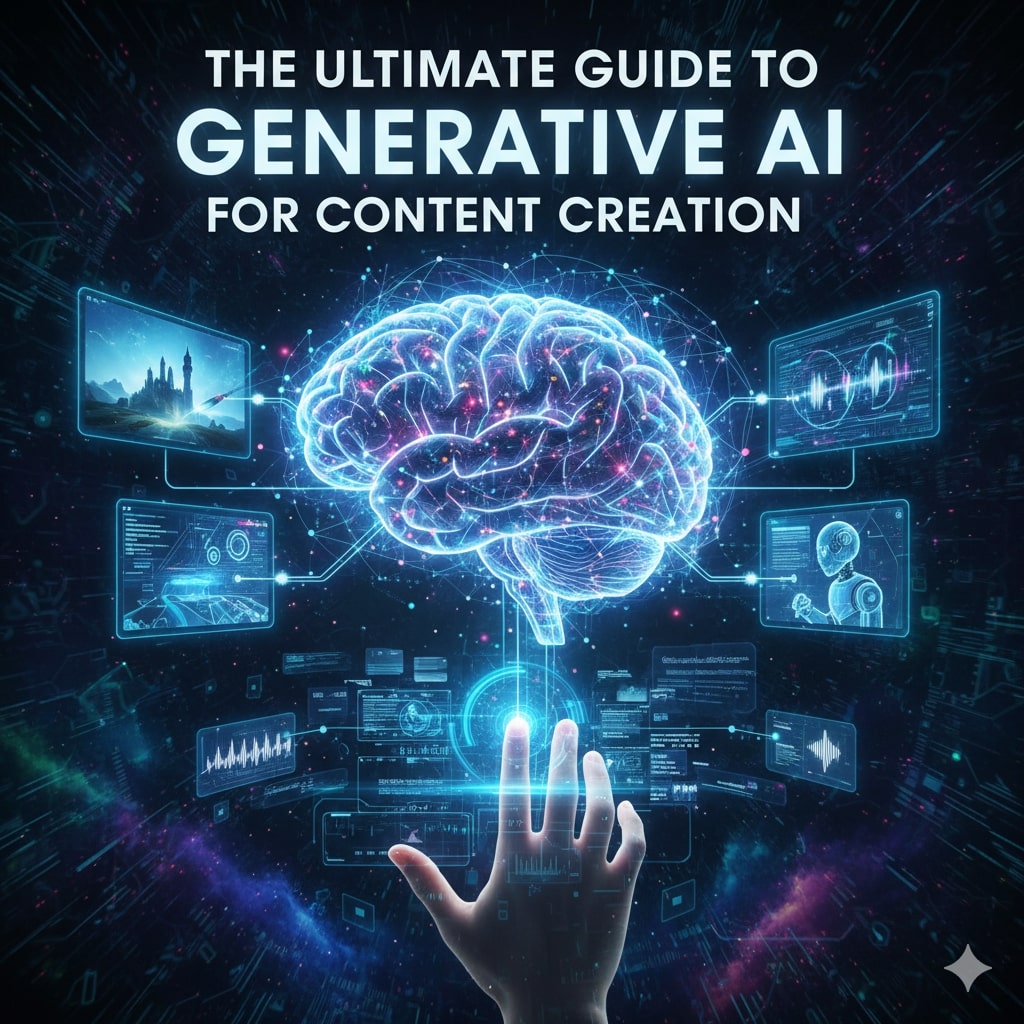
In the digital age, content creation has evolved rapidly and generative AI stands at the forefront of this transformation. Whether you are a marketer, blogger, or creative professional, leveraging generative AI can elevate your content strategy to new heights. This ultimate guide will explore what generative AI is, how to use it effectively and actionable tips to create compelling, human-like content that resonates with your target audience.
Understanding Generative AI and Its Role in Content Creation
Generative AI refers to advanced machine learning models designed to generate new content—ranging from text to images and videos—by learning patterns from existing data. Unlike traditional AI, which might classify or analyze data, generative AI actively creates, making it a powerful tool for writers and creators.
For instance, tools such as ChatGPT, Google Gemini and Jasper have revolutionized how content is produced by offering automated draft generation, idea brainstorming and even creative storytelling. However, it is crucial to remember that while AI can generate content quickly, human oversight is necessary to ensure quality, relevance and authenticity.
Benefits of Using Generative AI for Content Creation
There are several compelling reasons to integrate generative AI into your content strategy.
First, generative AI significantly speeds up the writing process by producing initial drafts or content snippets swiftly. This acceleration allows creators to focus on refining and tailoring content rather than starting from scratch.
Second, AI can help overcome writer’s block by providing fresh ideas or angles on topics that may be difficult to approach. Moreover, AI tools can assist in optimizing content for search engines by suggesting keywords and phrases, thereby improving organic reach.
Lastly, generative AI can enhance creativity by combining data-driven insights with innovative content formats, such as interactive blogs or personalized emails, offering new ways to engage audiences.
Getting Started: How to Use Generative AI Effectively
Before you start generating content with AI, it’s essential to approach the process with a clear plan. Follow these steps to maximize your results:
Define Your Goals and Audience
Begin with a clear understanding of who your content is for and what you want to achieve. As a guide, ask yourself: Are you educating, entertaining, or persuading? What tone and style resonate best with your readers? Having this clarity will help shape your AI prompts and ensure that the output aligns with your purpose.
Choose the Right AI Tool
Different AI tools serve distinct functions. For example, ChatGPT excels in writing versatile text content, while DALL·E specializes in image generation. Selecting the appropriate tool based on your content needs is crucial to obtaining effective results.
Craft Clear and Specific Prompts
The quality of AI-generated content depends heavily on the input prompt. Instead of vague instructions like “write an article about AI,” use detailed prompts that specify length, tone, target audience, and key points to cover. For example, “Write a 1000-word article in an engaging tone explaining how small businesses can benefit from generative AI in marketing.”
Edit and Personalize AI Content
AI-generated content should serve as a foundation. Review, edit and add your insights to ensure the content reads naturally and reflects your unique voice. This step is vital for maintaining authenticity and connecting with your audience.
Tips for Enhancing Content Flow with Transition Words
Having examined how to use generative AI, it is equally important to focus on the readability of the content. Transition words play a pivotal role in achieving this by linking ideas smoothly and guiding readers through your text.
Why Transition Words Matter
Without transition words, content can feel disjointed and difficult to follow. These words function as bridges, clarifying relationships between sentences and paragraphs, and helping readers anticipate what comes next. Consequently, good use of transitions increases engagement and comprehension.
Types of Transition Words to Use
There are several categories of transition words:
- Additive: also, furthermore, moreover
- Contrastive: however, on the other hand, nevertheless
- Cause and Effect: therefore, as a result, consequently
- Sequential: first, next, finally
- Examples and Emphasis: for example, indeed, notably
- Summarizing: in conclusion, to sum up, ultimately
Strategic Placement of Transition Words
You can place transition words at the beginning, middle, or end of sentences. For emphasis, placing them at the start works well: “Therefore, using generative AI saves time.” Alternatively, mid-sentence placement can create a smoother flow: “Using generative AI, therefore, saves time.” At the end, they can highlight a connection: “Generative AI saves time, for instance.”
Avoid Overusing Transition Words
While transition words enhance flow, overuse can make the text seem mechanical or repetitive. Vary your choice and only use transitions when they genuinely aid in the logical progression of ideas.
Practical Steps to Write a Generative AI Content Article
Let’s bring everything together with a practical approach to crafting an article using generative AI.
Step 1: Research and Outline
Start by using AI-powered keyword research tools to identify trending and relevant topics. Then, create an outline with key headings and subheadings to organize your thoughts and guide the AI in the writing process.
Step 2: Generate Content in Sections
Instead of generating the entire article at once, produce content section by section. This approach allows for more control and easier editing. You can prompt the AI with each section heading and specific instructions for content length and style.
Step 3: Enhance with Transition Words
After generating each section, review it for flow. Integrate transition words to connect ideas smoothly. For example, if moving from a problem statement to a solution, use causal transitions like “thus” or “consequently.”
Step 4: Add Supporting Visuals
Visual content complements text and improves user engagement. Use AI tools like Canva or DALL·E to create custom images, charts, or infographics that reinforce your message.
Step 5: Edit and Optimize
Perform thorough editing for clarity, tone and grammar. Use tools with readability checkers to ensure your article uses an optimal percentage of transition words and maintains audience engagement. Finally, optimize for SEO by incorporating relevant keywords naturally.
Step 6: Publish and Promote
Once published, promote your content across your social channels, email newsletters and relevant forums. Generative AI can also assist in creating promotional snippets or social media posts to boost your reach.
Addressing Common Concerns About AI Content Creation
Despite its benefits, generative AI raises certain concerns.
One common fear is that AI-generated content lacks originality. However, by combining AI drafts with human creativity and editing, you can produce unique, high-quality articles that stand out.
Another issue is ethical use. Always disclose when AI is used and avoid generating misleading or plagiarized content.
Finally, reliance on AI should not replace skill development in writing. Instead, view it as a complementary tool to enhance productivity and creativity.
The Future of Generative AI in Content Creation
Looking ahead, generative AI will continue to evolve, creating more sophisticated and contextually aware content. Integration with voice interfaces, improved personalization and better multilingual support are on the horizon. Content creators who embrace these advances and adapt their workflows will gain a competitive advantage.
Conclusion
Generative AI is revolutionizing content creation by enabling faster, more creative and data-driven production. By understanding how to harness its capabilities, crafting clear prompts and enriching your writing with transition words, you can produce engaging articles that resonate with readers and perform well in search engines.
As with any tool, the best results come from a blend of human insight and AI efficiency. Start experimenting today and unlock the full potential of generative AI for your content strategy.