



She cut her hair. She bared her ankles. She wrapped herself in pearls, beaded silk, and quiet rebellion, and the world of fashion never quite recovered.
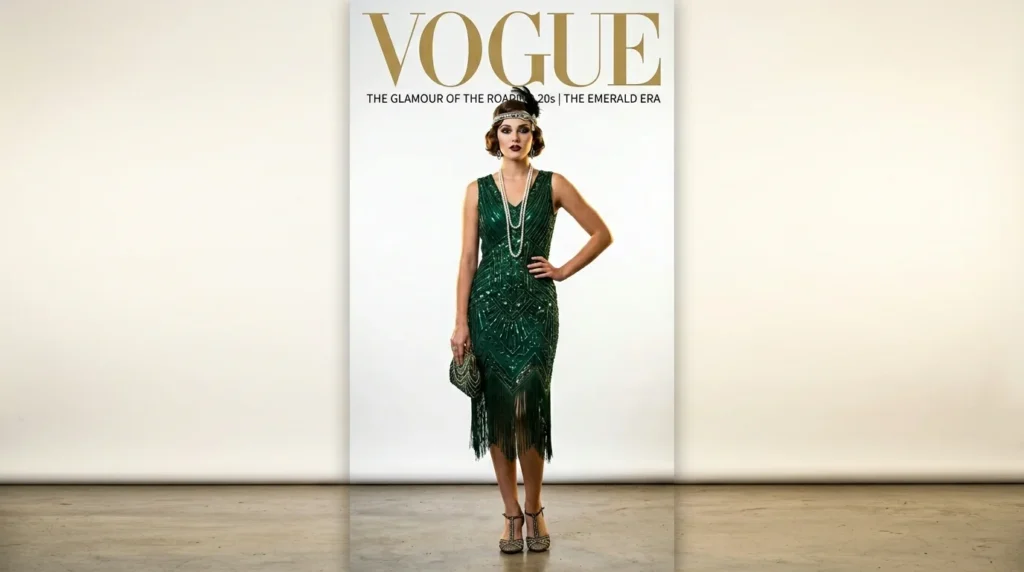
The fashionable woman of the 1920s did not just update her wardrobe; she also updated her lifestyle. She dismantled the entire visual code of femininity that had existed for centuries. And today, on every runway from Paris to New York, on every vintage-hunting corner of social media, her silhouette is back with force.
But here is what most trend recaps get completely wrong. The 1920s were not one single frozen look. They were ten years of fast, radical, season-by-season reinvention. Knowing exactly what made her iconic, from the shape of her dress to the curve of her lip, is the only way to wear it right today.
So let us get into it. All of it.
What Did the Fashionable 1920s Woman Actually Look Like?
The Silhouette That Shocked an Entire Society
The single biggest shift in 1920s women’s fashion was the complete rejection of the hourglass figure. The corseted waist, the padded hips, the theatrical curves of the Edwardian era, all of it was gone.
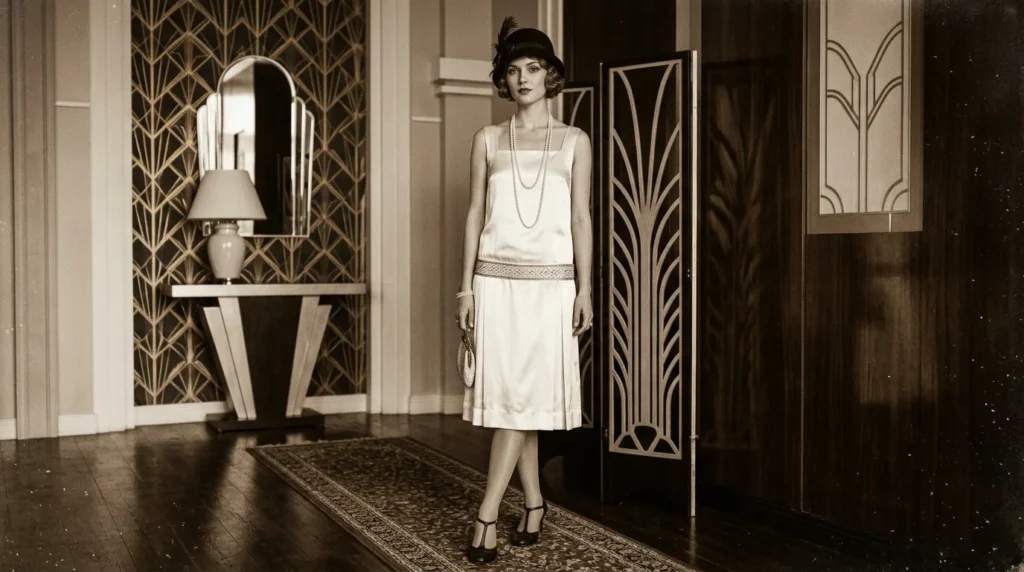
What replaced it was a long, lean, almost boyish column. Dropped waistlines sat low at the hip. Skirts landed somewhere between the calf and the knee, which was a genuinely scandalous length in 1922.
Expert Consensus: Fashion historians at the Victoria and Albert Museum in London have noted that the 1920s silhouette was the first time in modern Western fashion history that a straight body shape was actively celebrated. That shift was tied directly to women gaining new political and social freedoms after World War I.
The look also required entirely different undergarments. Bandeau bras flattened the chest. Long-line corselettes smoothed the hips into a cylinder. The goal was not an hourglass. The goal was a column, clean and uninterrupted from shoulder to hem fashionable 1920s woman.
The Hair Revolution That Changed Everything
Nothing announced a fashionable 1920s woman faster than the bob cut.
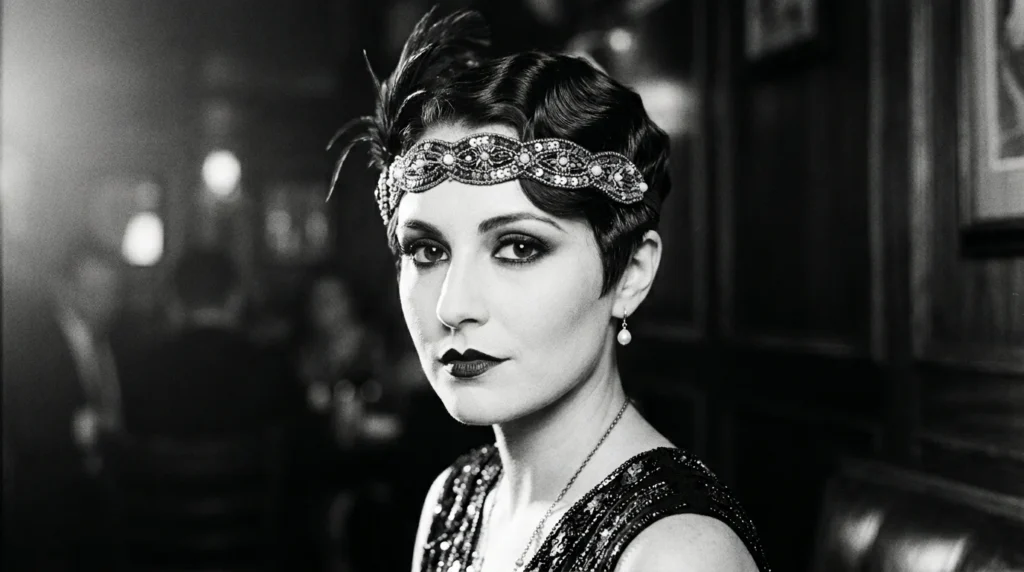
Short. Sleek. Sometimes waved into finger curls with a heated Marcel iron. Sometimes cropped so close at the nape, it was called the Eton crop. The bob was a political statement disguised as a haircut, and salon chairs across Paris, London, and New York could not keep up with demand.
The shingle bob, tapered tight to the skull at the back, was the most fashionable version by mid-decade. Louise Brooks made it immortal on screen. Josephine Baker electrified the stage.
And the connection between short hair and short skirts was not accidental. Each one made the other more necessary, more logical, more complete.
The Key Clothing Items Every Fashionable 1920s Woman Owned
The Flapper Dress: What It Really Was
The phrase “flapper dress” is used constantly and is almost always misunderstood.
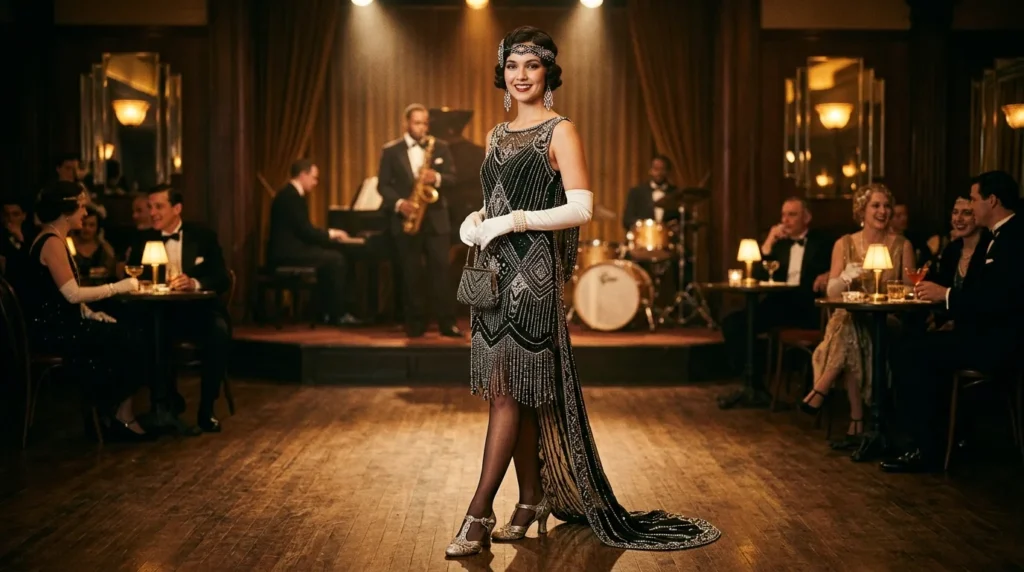
A true flapper dress was not always covered in fringe. The defining features were: a dropped waist that sat at or below the hip, a hemline at or just below the knee, and a loose and unstructured bodice that allowed complete freedom of movement, particularly for dancing the Charleston through a crowded ballroom.
Beading was the signature of the evening flapper gown. Thousands of glass, jet, and crystal beads were hand-stitched into bold Art Deco geometric patterns. These gowns were genuinely heavy. A fully beaded 1920s evening dress could weigh up to fifteen pounds, a fact that most modern costume versions completely ignore.
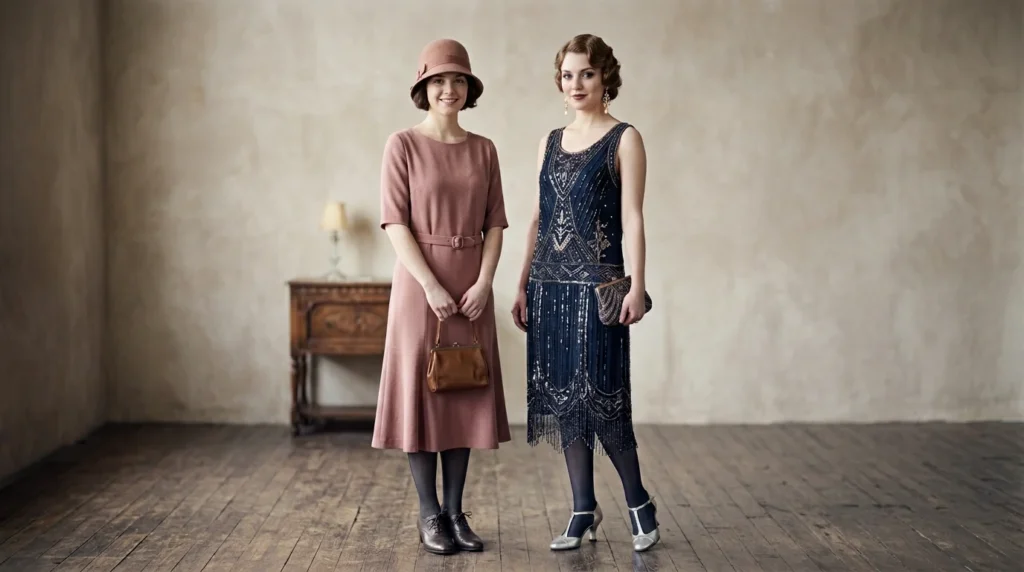
Day Dress Versus Evening Gown: The Key Differences
| Fabric | Cotton, linen, wool crepe | Silk charmeuse, chiffon, velvet |
| Hemline | Mid-calf, rising to knee by 1925 | Knee-length front, longer trained back |
| Embellishment | Simple collar, belt, button detail | Heavy beading, sequins, lace overlays |
| Neckline | High or modest V-shape | Low V, wide scoop, or bateau neck |
| Sleeves | Long or elbow-length | Sleeveless or sheer cap sleeves |
| Undergarment | Light stays or girdle | Bandeau bra plus hip-smoothing foundation |
The Coat: Where Real Status Was Worn
Here is something that stylists who specialise in period dressing consistently bring up: the coat was the true status symbol of 1920s fashion.
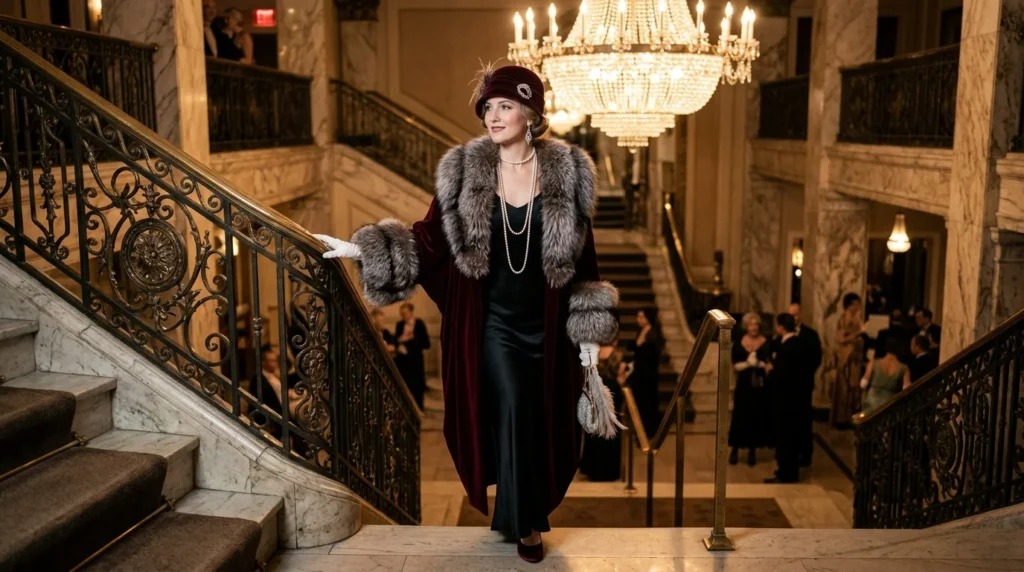
Dresses could be home-sewn or bought affordably from department stores. But a well-cut coat required skilled tailoring and expensive fabric. The most fashionable silhouettes featured cocoon or barrel shapes, wide and generous through the body, with fur trim at the cuffs, collar, and hem.
The opera coat, voluminous and floor-length and worn over evening dress, was the decade’s ultimate luxury statement. If she walked in wearing one, every eye in the room followed her.
Sportswear: The Category Nobody Talks About
The fashionable 1920s woman gave birth to something genuinely new: women’s sportswear as legitimate everyday fashion.
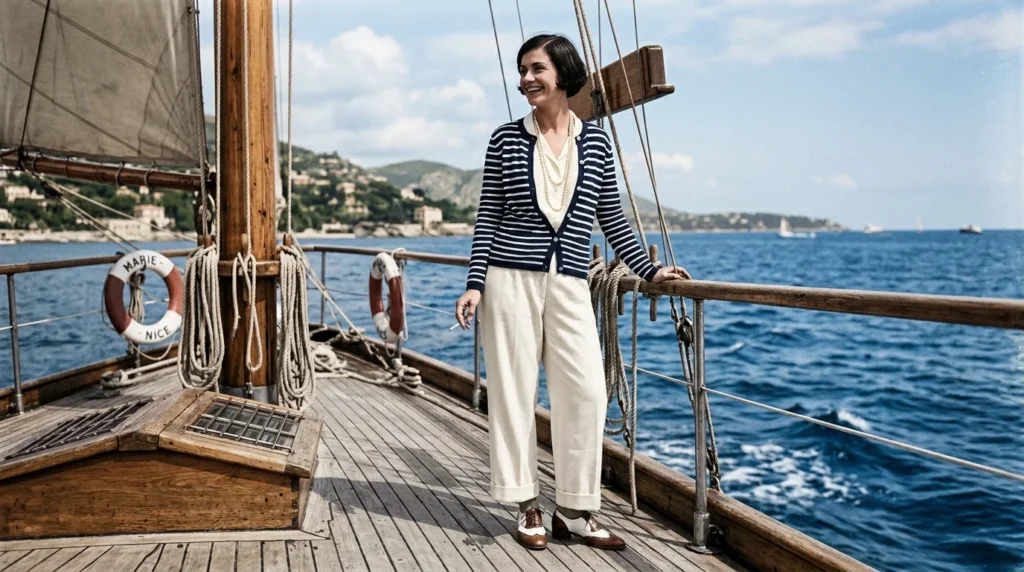
Tennis whites, bathing costumes, and golf skirts all became acceptable beyond their original athletic context. Coco Chanel practically invented the modern category, turning jersey knit (originally a men’s fabric) into chic women’s suits and cardigan ensembles that were easy, comfortable, and absolutely stylish.
This is the fashion chapter that almost every modern 1920s recreation skips entirely. The fashionable woman of 1924 was not only in a beaded gown at midnight. She was also in wide-legged flannel trousers on a yacht in the South of France, looking effortlessly impeccable.
Accessories That Defined the 1920s Fashion Woman
The Cloche Hat: The Era’s True Signature
Pull it low over the brow. That is the complete instruction.
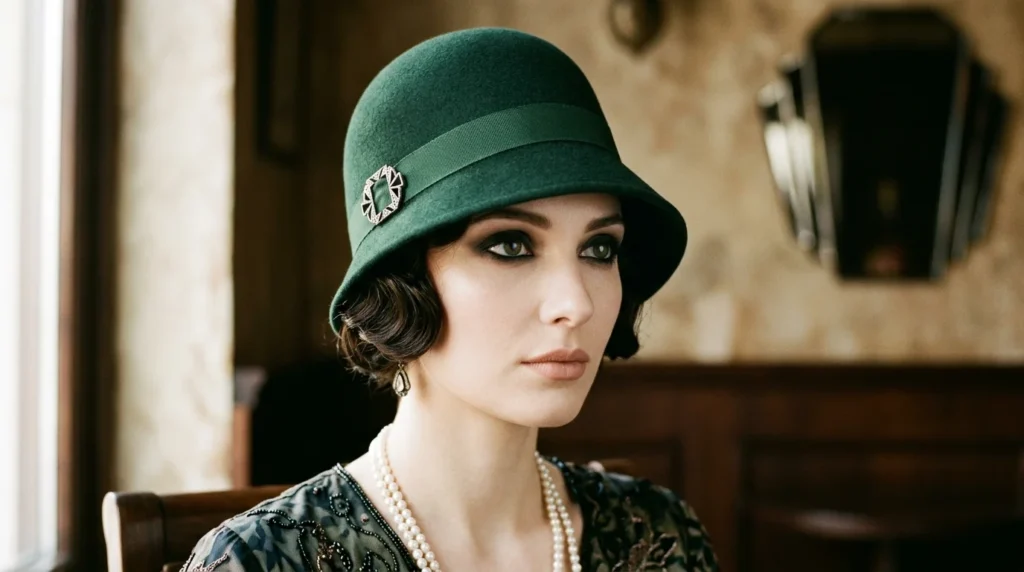
The cloche hat, from the French word for bell, was so closely fitted to the skull that short hair was practically a requirement just to wear it comfortably. And that was not accidental. The cloche hat and the bob evolved together across the decade, each one making the other more fashionable, more necessary.
Colours ranged from quiet beige and grey for day to jewel-toned velvet for evening occasions. Ribbon trim, art-deco buckles, and feather accents signalled the difference between a Tuesday and a gala.
Authentic 1920s Cloche Versus a Modern Reproduction: How to Tell
- Authentic piece: Hand-blocked felt with a very small interior circumference, a single interior ribbon band, and no modern sizing label
- Modern reproduction: Machine-made felt with a roomier and more comfortable fit, a grosgrain band inside, and a standard size tag sewn in
Jewellery: Art Deco Geometry on Every Wrist and Ear
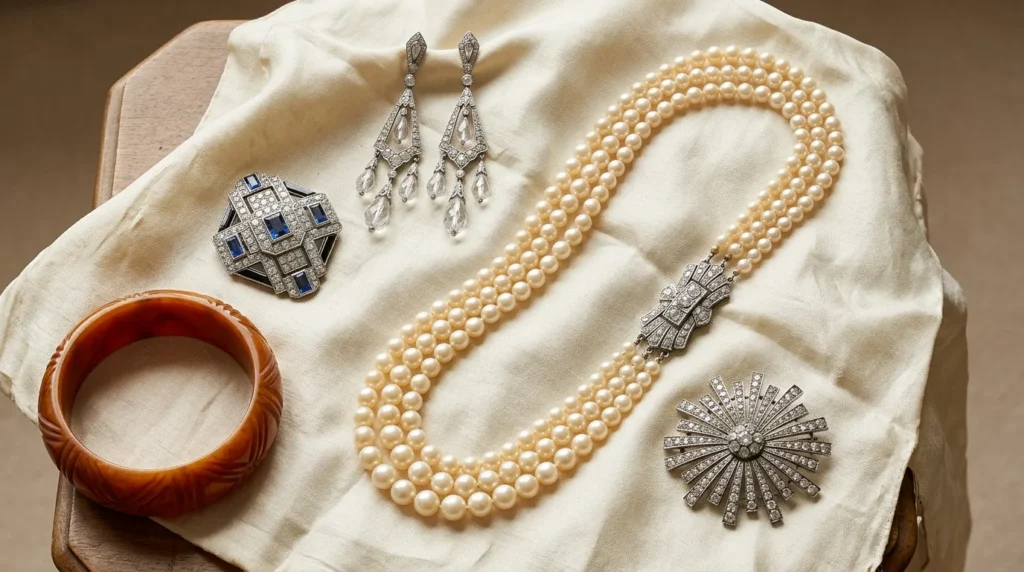
1920s jewellery did not whisper. It announced itself across a room.
Long pearl ropes doubled or tripled around the neck. Geometric Art Deco brooches in platinum and diamonds sat at the shoulder or chest. Wide Bakelite bangles in amber, jet black, and ivory stacked up the arm.
Salon Secret from vintage jewellery specialists: The most wearable and most collected 1920s pieces on the market today are the paste-and-glass-stone brooches. They read as genuinely luxurious, they are structurally durable, and authentic examples appear regularly at estate sales for a fraction of what fine jewellery costs. Start there if you are building a real vintage collection.
Drop earrings were worn long because newly cropped hair made ears fully visible for the first time in decades. Jewellers rushed to fill that space with dangling pendants and chandelier-style clips.
Shoes and Stockings: The Details That Finished Everything
T-bar shoes. Mary Janes. Low Cuban heels in leather and silk brocade. Silk stockings in suntan and nude shades, often seamed up the back, were standard dress for any fashionable occasion.
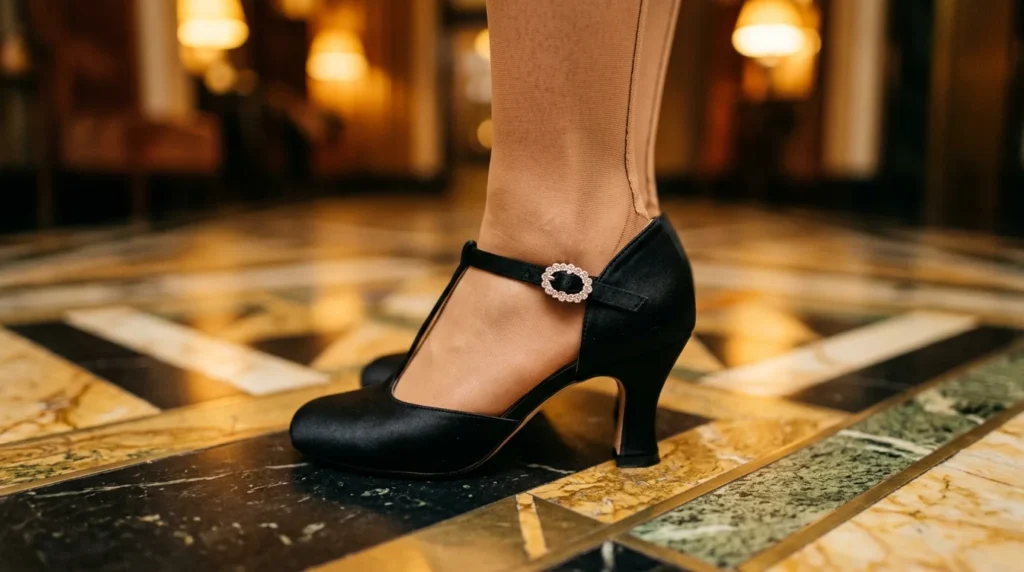
Evening shoes featured Louis heels, rhinestone buckles, and brocade fabrics that echoed the gown’s embellishments. Shoes were meant to be seen, and for the first time in generations, rising hemlines made that possible.
The Designers Who Dressed the Fashionable 1920s Woman
Coco Chanel: Comfort as a Radical Act
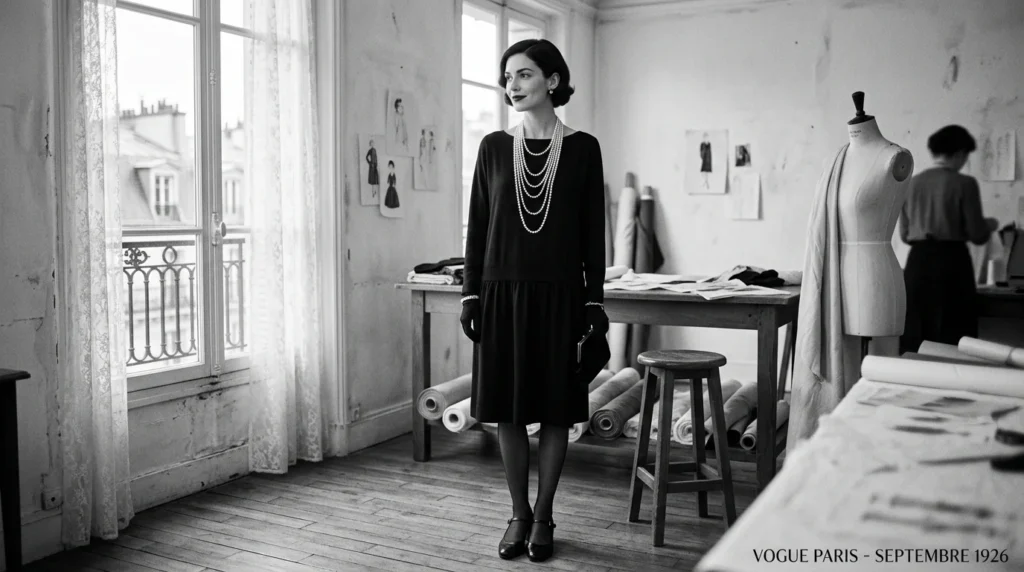
Chanel did not invent the 1920s aesthetic. She liberated it.
Her jersey knit suits, her little black dress introduced in Vogue in 1926, her layering of costume jewellery over simple silhouettes, all of these were deliberate acts of rule-breaking. She made ease aspirational. That was the genuinely revolutionary move.
Before Chanel, comfort was considered unfashionable. She made the world see it as the highest form of chic.
Madeleine Vionnet: The Technical Genius Behind the Drape
While Chanel earned the press coverage, Madeleine Vionnet perfected the underlying craft.
Her bias-cut technique, cutting fabric diagonally across the grain of the weave, allowed fabric to drape and cling in ways that had been structurally impossible before. Vionnet’s gowns from the late 1920s bridged the flapper decade directly into the sleek and body-conscious 1930s.
If you have ever worn a dress that seems to melt onto the body and move with you rather than around you, you are wearing her legacy without knowing it.
Paul Poiret: The Decade’s Opening Act
Poiret dominated the previous decade but lost his commercial footing by the mid-1920s. Still, his harem trousers, draped tunics, and orientalist embellishments set the aesthetic groundwork that the flapper era would riff on and eventually leave behind.
Understanding where 1920s fashion came from is the only way to fully understand how shocking it was when it arrived.
Common Mistakes When Recreating 1920s Fashion Today
The Fringe Overload Problem
Walk into any costume shop, and the 1920s section is ninety per cent fringe. But here is the reality that professional period stylists repeatedly point out: fringe was one element in the toolkit, not the whole wardrobe.
Most fashionable women of the decade wore fringe occasionally, on an evening shawl, on a single hem detail. They did not dress head-to-toe in it. A woman entirely covered in fringe would have looked like a costume rather than a fashion statement, even in 1926.
The editorial advice from stylists who shoot period looks consistently comes down to this: choose one statement element, whether beading, fringe, or embroidery, and let it anchor an otherwise clean and minimal silhouette. That is the approach that reads as fashion rather than fancy dress.
Getting the Makeup Completely Wrong
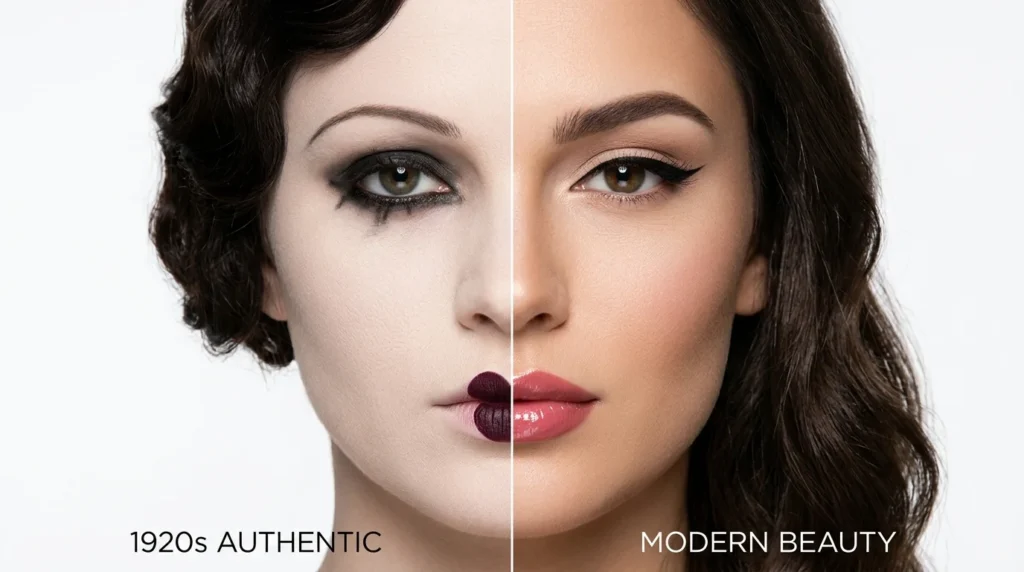
The other dead giveaway of an inauthentic 1920s look is modern contouring applied to a face that should be flat, matte, and graphic.
The fashionable 1920s woman wore foundation several shades lighter than her natural skin, heavily kohl-darkened eyes that were smudged and elongated at the outer corners, and a cupid’s bow lip painted slightly smaller than the actual lip line in deep reds, plums, or dark burgundy.
No visible blush. No highlight. No contour. The look was deliberate and almost masklike in its precision. That is the detail that separates a genuinely convincing 1920s recreation from a Halloween costume.
How to Shop the 1920s Fashion Aesthetic Right Now
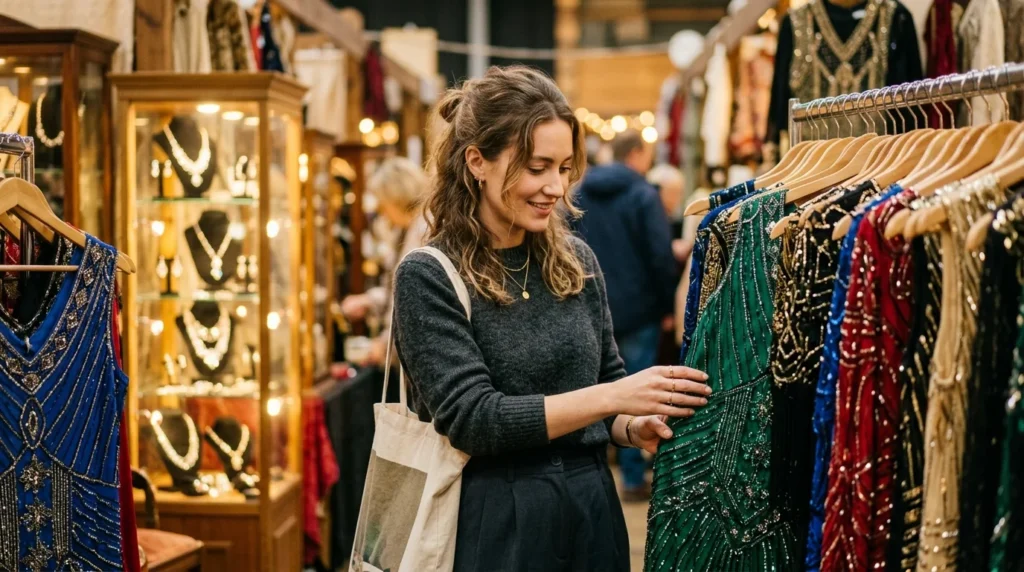
Authentic Vintage Versus Quality Reproduction: What Is Worth Your Money
| Price Range | $200 to $5,000 and above | $40 to $400 |
| Where to Find | Specialist dealers, estate sales, auction houses | ASOS, Etsy vintage-inspired sellers, dedicated brands |
| Durability | Fragile, silk and beading degrade with wear | Sturdier and better suited to regular wear |
| Best For | Display, editorial photography, very careful wear | Everyday styling, events, themed occasions |
| Authenticity Factor | Completely unmatched | Variable, research the seller carefully |
Modern Brands Getting the 1920s Right.
Several contemporary labels have captured the spirit without falling into costume territory:
- Needle and Thread (UK): Genuinely beautiful beaded and embellished gowns with real Art Deco geometry in the patterning
- RIXO (UK): Vintage-inspired prints and silhouettes at genuinely accessible price points for regular wear
- Free People: Occasionally produces true drop-waist and bias-cut silhouettes worth tracking down
- Marchesa: For occasions that call for full period grandeur at a luxury price point
The fashionable woman of the 1920s was not a costume or a trend reference. She was a turning point in the entire history of how women are seen and how they choose to be seen.
Every time you reach for a bias-cut slip dress, a long pearl rope, or a sharp graphic lip in a deep plum shade, you are pulling on a thread that leads directly back to her. She wore it first. She wore it boldly. And she did it while dancing until dawn.
Frequently Asked Questions (FAQ)
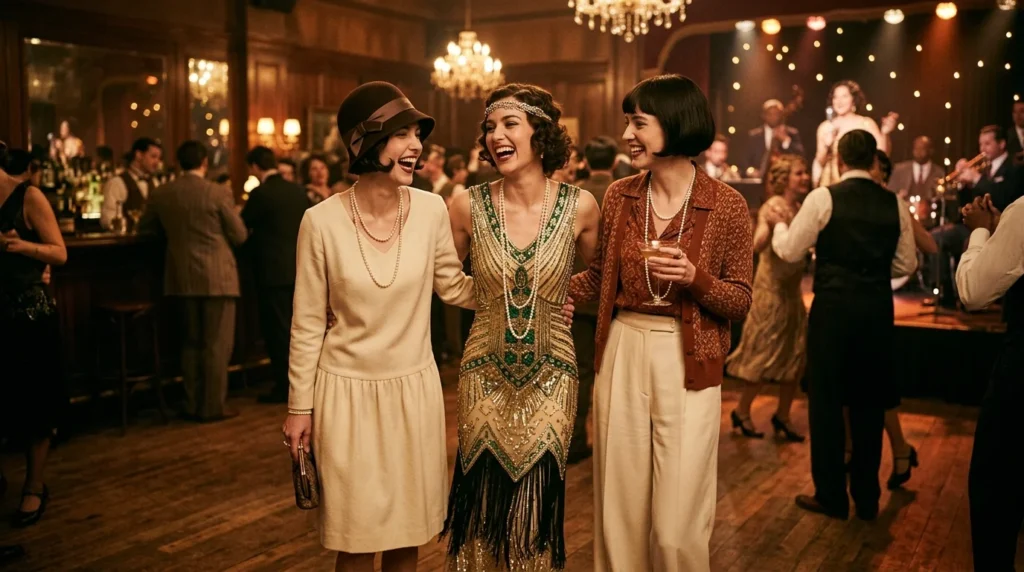
What did fashionable women wear in the 1920s for everyday occasions rather than parties?
Day dresses of the 1920s were far more modest than the evening flapper image suggests. Wool crepe, cotton lawn, and lightweight silk were the typical fabrics for daywear. Hemlines for everyday dressing actually rose more slowly than popular culture implies, and many women were still wearing mid-calf lengths well into 1925. A typical everyday outfit consisted of a dropped-waist dress, a cardigan or knit jacket heavily influenced by Chanel, lisle or silk stockings, leather Oxford or bar-strap shoes, and a low-pulled cloche hat. Sportswear separates, including wide trousers, simple knit tops, and straight skirts, also became acceptable daywear by mid-decade, particularly among younger urban women.
How did 1920s women’s fashion differ between the United States, France, and the United Kingdom?
Paris set the direction, but each country interpreted it through its own cultural filter. French couture houses, including Chanel, Vionnet, and Lanvin, defined the ideal silhouette each season. American women received Paris trends through department store buyers and fashion magazines like Vogue and Harper’s Bazaar, often with a six- to twelve-month delay, and American interpretations tended to be slightly more conservative in hemline and neckline. British 1920s fashion was even more restrained, filtered through a cultural preference for practicality and a strong sporting culture. Tailored tweed separates and country-appropriate knit ensembles were far more common across the UK than the fully beaded evening looks that dominated Parisian fashion coverage.
What jewellery was most fashionable for 1920s women, and where can you find authentic pieces today?
The most fashionable jewelry of the decade fell into three clear categories: long pearl ropes in real, cultured, or high-quality imitation pearl (the Mikimoto cultured pearl revolution of the early 1920s made them far more accessible to middle-class women), Art Deco brooches and dress clips in geometric designs set in platinum with diamonds, sapphires, emeralds, and onyx, and Bakelite bangles and glass bead necklaces at the more affordable end of the market. To find authentic pieces today, specialist vintage jewellery dealers and established auction houses such as Christie’s and Bonhams regularly sell estate jewellery from the period. For more accessible options, estate sales, regional antique fairs, and dedicated Art Deco jewellery sellers on Etsy frequently yield genuine 1920s pieces at reasonable prices. Always look for platinum or white gold settings, which were the fashionable metal choices of the decade, and examine stones for the characteristic hand-cut facets that distinguish authentic period pieces from later machine-cut reproductions.