





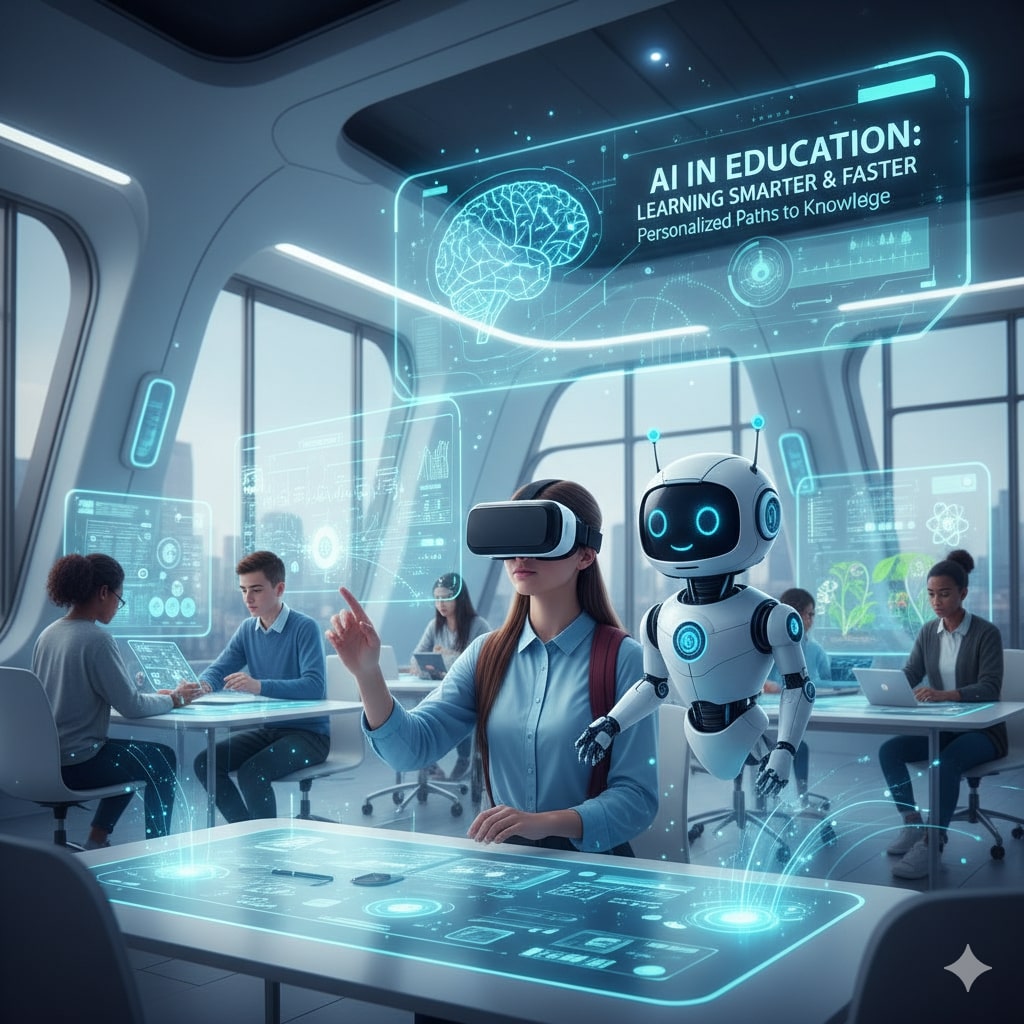
Artificial Intelligence (AI) is revolutionizing education across the globe, transforming how students learn and interact with knowledge. Through smart tools and personalized learning systems, AI is enabling students to absorb information more efficiently than ever before. This article explores how AI makes learning smarter and faster, the benefits it brings, as well as challenges and future prospects.
The Changing Face of Education
Traditional education has long relied on one-size-fits-all teaching methods, which often overlook individual student needs. However, AI introduces customized learning experiences that adapt to each student’s pace, style and preferences. For instance, AI-powered tutoring systems can analyze student weaknesses and adjust lessons accordingly. Consequently, this personalized approach helps students grasp complex topics more deeply while maintaining engagement.
Moreover, AI streamlines administrative tasks for educators by automating grading and attendance tracking. This shift allows teachers to focus more on direct student support and creative lesson planning. As AI takes over routine processes, educational institutions become more efficient overall.
How AI Enables Smarter Learning
AI-driven adaptive learning platforms form the backbone of smarter education. These systems continuously evaluate a student’s performance and modify the difficulty and format of content. Thus, learning becomes dynamic rather than static, catering specifically to the user’s evolving needs.
For example, intelligent tutoring systems deliver interactive problem-solving exercises tailored to current skill levels. As students progress, the AI introduces new challenges to stimulate critical thinking without overwhelming them. Similarly, learning apps with natural language processing capabilities can understand and respond to student queries instantly, providing real-time feedback.
Furthermore, predictive analytics help identify students at risk of falling behind by analyzing attendance records, test scores and engagement data. Educators can then intervene promptly with personalized support, preventing academic decline. As a result, AI serves as both a tutor and an early warning system.
Accelerating Learning Speed Through AI Tools
AI expedites the learning process in several significant ways. Firstly, AI-powered content curation aggregates and simplifies information from vast resources. Students no longer waste time sifting through irrelevant content; instead, AI recommends the most pertinent study materials instantly.
Secondly, voice recognition and speech synthesis technologies enable hands-free studying. Students can listen to summaries, practice pronunciation and engage with language models on the go, transforming otherwise passive time into productive learning sessions.
Additionally, AI facilitates immersive learning through virtual and augmented reality environments. For example, medical students can practice surgeries in simulated settings, gaining practical experience without real-world risks. Such experiential learning helps solidify knowledge faster than traditional methods.
Moreover, AI chatbots powered by conversational AI can answer questions anytime, providing immediate assistance outside classroom hours. This 24/7 availability supports continuous learning, accelerating comprehension and retention.
The Benefits of AI in Education
The integration of AI in education yields numerous advantages for students, teachers and educational institutions alike.
- Personalized Learning: AI adapts to individual needs, improving understanding and motivation.
- Enhanced Engagement: Interactive AI tools keep students involved and interested.
- Accessibility: AI enables students with disabilities to access educational content more easily.
- Efficient Resource Use: Automated grading and administration free up teacher time.
- Data-Driven Insights: AI analytics offer valuable feedback on learning trends and challenges.
- Cost-Effectiveness: Digital AI tools can reduce the need for expensive physical materials.
Thus, AI makes education more equitable, scalable and effective—benefitting diverse learners worldwide.
Addressing Challenges and Concerns
Despite its profound potential, AI in education also raises challenges that require careful management.
Data privacy is a foremost concern. Student information collected by AI systems must be protected against misuse, requiring strong cybersecurity measures and transparent policies.
Furthermore, there is a risk that over reliance on AI could diminish human interaction. Teachers provide emotional support and nuanced understanding that technology cannot replicate. Therefore, AI should augment rather than replace educators.
Bias in AI algorithms is another issue. If training data lack diversity, AI systems may inadvertently reinforce inequalities. Regular audits and inclusive datasets are essential to ensure fairness.
Additionally, the digital divide limits access to AI-powered education in underserved areas. Addressing infrastructure gaps and affordable devices is critical for widespread adoption.
Practical Applications of AI in Classrooms Today
Many educational institutions are already benefiting from AI innovations.
- Intelligent Tutoring Systems like Carnegie Learning provide personalized math instruction tailored to each student.
- Language learning apps such as Duolingo use AI to adapt lessons and practice speech recognition.
- Automated Essay Scoring tools help teachers grade essays faster, freeing time for one-on-one student interactions.
- Virtual Classrooms utilize AI to facilitate remote learning with real-time translation and engagement tracking.
These applications demonstrate how AI is gradually reshaping learning environments for better outcomes.
Future Prospects: AI Transforming Education by 2030
Looking ahead, AI’s role will expand beyond current capabilities.
We can expect more sophisticated systems capable of emotional recognition, enabling personalized counseling and mental health support. AI will also integrate with brain-computer interfaces to tailor content based on cognitive states.
Adaptive learning will evolve into fully autonomous educational companions, guiding students throughout their academic journeys. Additionally, AI will enhance collaborative learning by connecting students globally through intelligent platforms.
Moreover, the fusion of AI with blockchain could create secure, interoperable records of academic achievement, simplifying credential verification and lifelong learning pathways.
Conclusion
AI is a powerful catalyst for improving education. By personalizing instruction, accelerating learning speeds and providing continuous support, AI helps students learn smarter and faster. Nonetheless, success depends on addressing ethical concerns, preserving human touch and ensuring equitable access.
Educators, policymakers and technologists must collaborate to harness AI responsibly. When implemented thoughtfully, AI promises a future where all learners can thrive, empowered by intelligent tools tailored to their unique needs.